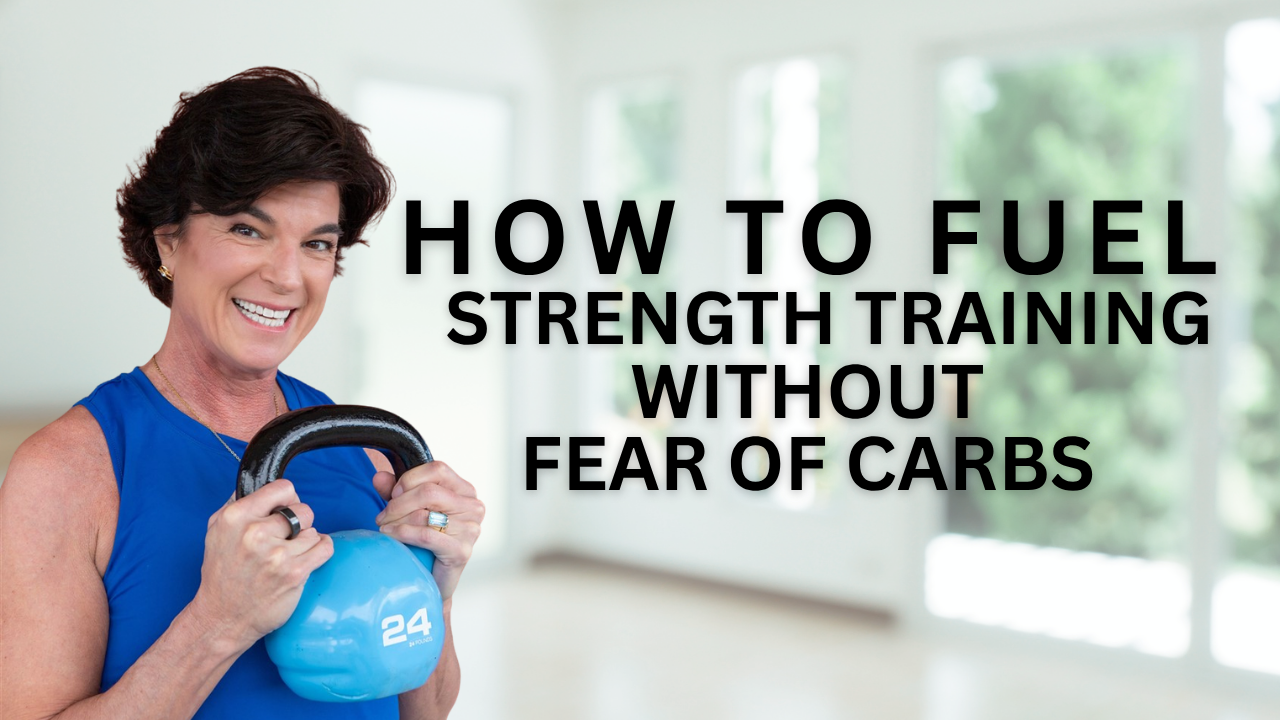
How to Fuel Strength Training Without Fear of Carbohydrates
Apple Podcast - Spotify - YouTube
If you’re a woman over 40, you may be wondering what to eat before and after strength training—especially if your goals include building muscle, losing stubborn belly fat, and having more energy.
There is so much conflicting information out there. Exercise fasted. Never exercise fasted. Avoid carbohydrates. Eat carbohydrates. Drink a protein shake immediately. Wait until your next meal. It’s enough to make you wonder if you need a nutrition degree just to complete your workout!
I want to simplify this for you.
Your midlife body needs adequate fuel to perform, recover, and build lasting muscle. That doesn’t mean you need a huge meal every time you pick up a dumbbell, but intense exercise during perimenopause, menopause, and post-menopause usually deserves more support than a cup of coffee and sheer determination.
Why Strength Training After 40 Requires Proper Fuel
Strength training sends an important message to your body.
When you challe...
Easy Summer Protein Meals to Help You Lose Weight After 40
Apple Podcast - Spotify - YouTube
If you’re trying to lose weight, get enough protein, and work on stubborn belly fat this summer, you may be running into one very practical problem: you do not want to cook.
And honestly, I get it. It’s hot outside, the kitchen is hot, and the idea of standing over a stove making an elaborate dinner for an hour feels about as appealing as putting on a sweater and going for a walk at noon.
But when summer gets busy, it becomes really easy to fall into a cycle of grabbing chips, snacking through dinner, skipping meals, or deciding that watermelon is somehow a complete food group. Then a few hours later, your energy crashes, you’re hungry again, and you’re wondering why staying consistent feels so hard.
That’s where keeping protein for weight loss simple can make such a difference, especially for women in perimenopause, menopause, and beyond.
You do not need complicated recipes or hours of meal prep. You simply need a few easy meals you can ...
The Smarter Way to Lose Belly Fat After Menopause
Apple Podcast - Spotify - YouTube
If you are trying to lose weight after menopause and feel like your belly fat is refusing to budge, you may assume the answer is to eat less and exercise harder. Maybe you have added more cardio, searched for new belly fat loss workouts, or tried to tighten up your Trim Healthy meals even more.
But what if your body does not need more punishment?
What if the smarter way to lose belly fat after menopause is to walk more, build muscle, fuel your body well, move consistently, and support your metabolism instead of constantly pushing it?
That may not sound flashy or extreme. It will not grab attention like a dramatic detox or a workout promising to melt belly fat in seven days. But sustainable strategies are the ones that help us create lasting results—and sustainable always wins.
Why Belly Fat Loss Feels Different After Menopause
Many women reach perimenopause or menopause and suddenly feel like they are living in a different body.
You ...
3 Protein Mistakes That Keep Women From Losing Weight
Apple Podcast - Spotify - YouTube
This post contains affiliate links, which means I may earn a small commission at no extra cost to you.
If you've been faithfully eating healthy, following Trim Healthy principles, and still wondering why the scale isn't moving, I want to encourage you today. It may not be because you're eating too many carbs. It may not be because your metabolism is "broken." And it may not even be because your hormones are working against you.
One of the most overlooked reasons women struggle to lose weight during perimenopause and menopause is simply not getting enough protein—or not eating it in the right way. I know because I've walked this road myself. As a certified personal trainer, menopause fitness specialist, and Trim Healthy Mama coach, I've watched hundreds of women make this one change and begin noticing fewer cravings, better energy, improved strength, and more success losing body fat without feeling deprived.
Today I want to share the three bi...
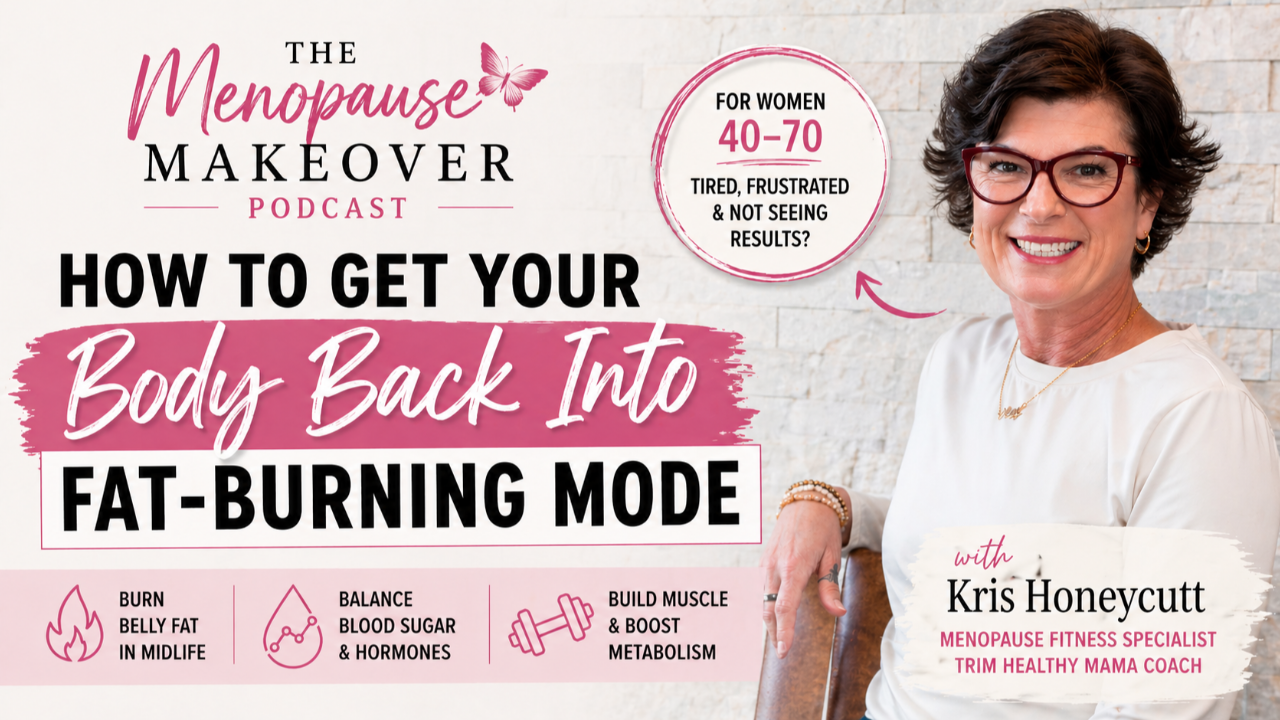
How to Get Your Body Back Into Fat-Burning Mode
Apple Podcast - Spotify - YouTube
Have you ever felt like your body just… stopped responding?
You’re doing what worked before.
You cleaned up your eating. You’re staying consistent. You’re working out. You’re trying to burn belly fat the way you always have.
And yet… your body is not cooperating.
The scale is stuck. Your energy is low. And somehow, belly fat feels like it’s showing up faster than ever.
If you’ve found yourself wondering, “Why is my body not in fat-burning mode anymore?”—you’re not alone, and you’re not imagining it.
This is one of the biggest shifts that happens in midlife.
Why Belly Fat Burning Changes After 40
Here’s what I want you to understand first, your body is not working against you.
It’s responding to a new season.
As we move through perimenopause and menopause, hormones begin to shift in ways that affect everything—your metabolism, your energy, your muscle, and how your body stores fat.
One of the biggest drivers behind this change is hi...
The Protein Pitfall Stalling Your Fat Loss After 40
Apple Podcast - Spotify - YouTube
Friend, if you feel like you’re doing all the right things—eating healthy, trying to stay on plan, maybe even moving more—but your body just isn’t responding… I want you to pause right here with me.
Because this might not be about trying harder.
It might be about understanding how your body has changed—and what it actually needs now.
Today we’re talking about protein, strength training, and even how high cortisol can quietly play a role in why things feel stalled. We’re also going to answer a question I hear all the time: how much protein do you really need to lose weight with a high protein approach in midlife?
And friend, the answer might surprise you.
The Protein Rule You’ve Been Following Might Be Outdated
For years, we were taught that your body can only absorb 20–30 grams of protein at a time.
Anything more?
Wasted.
Or worse—stored as fat.
So many women I work with are still building their meals around that belief. They’re gettin...
What to Do When Sugar Cravings Hit: Breaking Up With Sugar Pt 3
Apple Podcast - Spotify - YouTube
If you’ve been following along in this Breaking Up With Sugar series, you already know this isn’t just about willpower.
In Part 1, we talked about blood sugar and hormones.
In Part 2, we talked about mindset and emotional eating.
Now in Part 3, we’re getting very practical.
Because sometimes you don’t need another pep talk.
You need to know what to do when cravings for sugar hit at 3:30 in the afternoon… or after dinner… or when you’re tired and your belly fat feels stubborn and you’re wondering why this is still so hard.
Today I’m going to give you simple, Trim Healthy–aligned tools that reduce cravings physiologically — not by fighting yourself, but by supporting your body.
Why Cravings for Sugar Get Louder in Midlife
Before we jump into the tools, let’s quickly anchor this again.
Cravings for sweets in perimenopause and menopause are not random.
Estrogen shifts affect insulin sensitivity. Cortisol rises more easily. Sleep change...
18 Easy Trim Healthy Meals For Weight Loss In Menopause
Apple Podcast - Spotify - YouTube
If you’re a Trim Healthy Mama who’s hit midlife and can’t seem to get your energy—or your waistline—back on track, I see you.
Maybe you’ve been skipping your E meals because “carbs = weight gain,” right?
Well, not so fast.
In this post, we’re breaking down why your body actually needs those energizing, carb-anchored meals in perimenopause and menopause, how to build them the Trim Healthy way, and how to make meal planning easy, balanced, and totally stress-free.
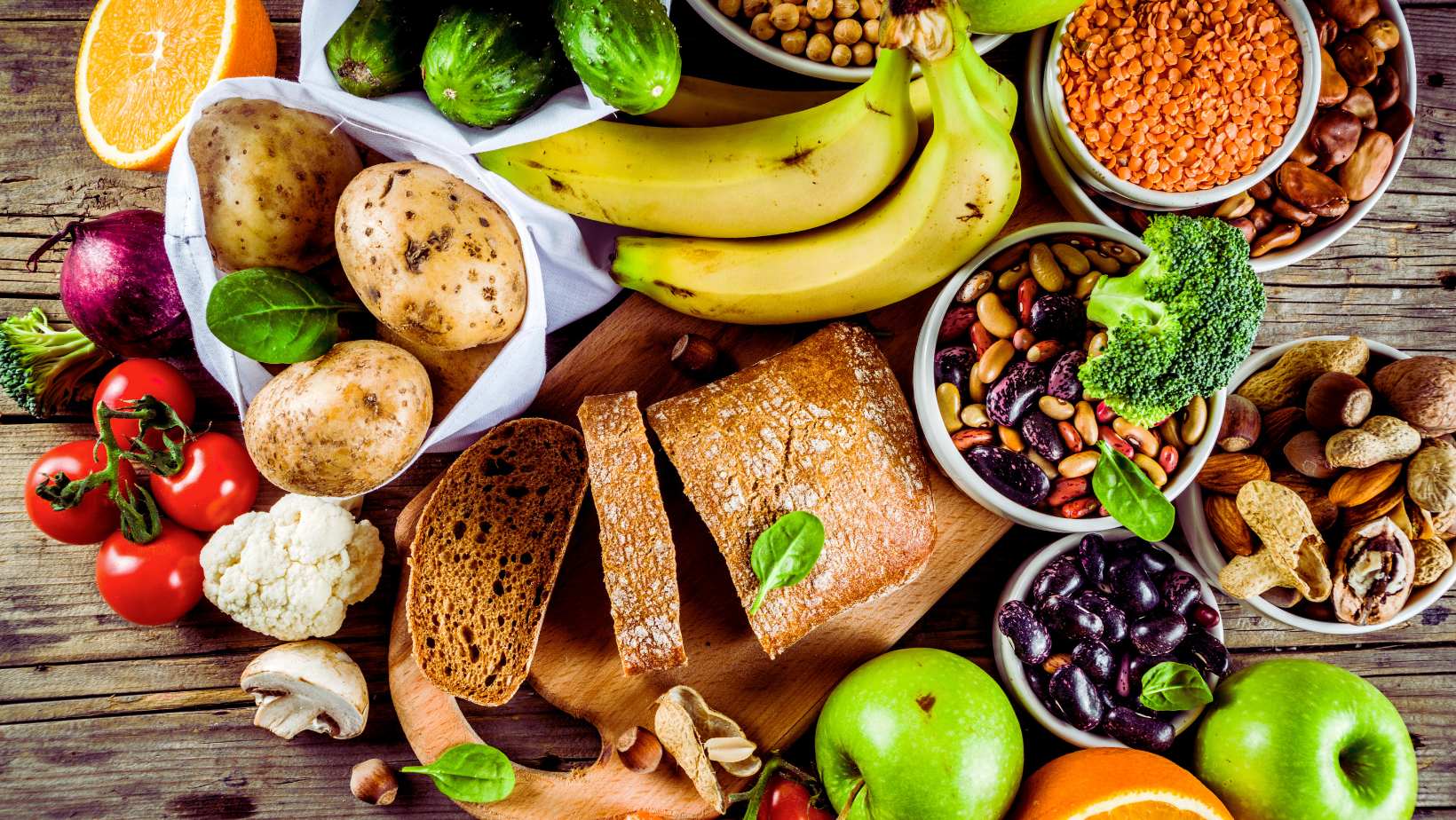
Why Trim Healthy Meal Planning with Carbs Helps You Lose Weight in Midlife
We’ve been told for years that cutting carbs is the secret to weight loss. And yes—cutting out packaged, processed carbs helps. But whole-food, low-glycemic carbs are a completely different story.
During perimenopause and menopause, estrogen begins to decline, and that affects everything: your energy, your mood, your thyroid, and especially your blood sugar.
When your blood sugar becomes unstable, your cor...
5 Steps to Create Your Ultimate Menopause Fat-Burn Plan
Apple Podcast - Spotify
The Hormone-Friendly Diet: What to Eat During Menopause to Lose Weight, Beat Belly Fat, and Balance Blood Sugar
Does It Feel Like Your Body Is Playing by a Whole New Set of Rules?
If you’re in your 40s, 50s, or 60s, you might be wondering: “Is it just me, or has my body switched the playbook?” The reality is, menopause really does change the rules when it comes to food, weight loss, and how our bodies handle blood sugar and fat storage. You might be doing “all the right things,” eating healthy, moving your body, and STILL seeing the scale go up—especially around the belly. If that sounds familiar, let me just say: you are NOT alone. In fact, you’re in very good company.
This new season comes with its own set of challenges. Our hormones shift, our metabolism slows down, and suddenly the tried-and-true diets from our 30s and 40s just don’t cut it anymore. It can feel discouraging and downright confusing! But here’s the good news—there is hope, and ...
Menopause Weight Gain & Belly Fat: How Colleen Took Control

Apple Podcast - Spotify
How To Lose 15 Pounds and Beat Menopause Weight Gain
Are you struggling with menopause weight gain and stubborn belly fat?
As hormones shift in perimenopause, it can feel impossible to lose weight—but it doesn’t have to be that way.
Today, I’m sharing an inspiring conversation with my client, Colleen, who joined my Blast the Belly Fat Bootcamp and transformed her health. She lost 15 pounds, reduced her menopause belly fat, and, more importantly, regained her energy and confidence—all while homeschooling and welcoming a new grandbaby!

Why Colleen Joined the Bootcamp to Lose Weight During Menopause
Colleen had been considering working with a coach for 8 to 10 years but never made the leap. Like so many midlife women, she was trying to figure things out on her own, but menopause weight gain and lack of accountability made it challenging.
Her biggest challenge? Staying consistent. Her family wasn’t on board with her weight loss efforts, and she fel...
Ready for more real talk, fat loss tips, and hormone support made for midlife women?
Author
Kris Honeycutt
I’m a Trim Healthy executive coach, menopause fitness specialist, and personal trainer helping women over 40 lose stubborn weight, balance hormones, and feel confident in midlife bodies. Around here, we ditch diet drama and build real results—one wise, grace-filled step at a time.
Recent Posts

Join my Tribe today
How do you make Trim Healthy your lifestyle eating plan?
By getting community & coaching support.
Real change happens with accountability and habits. You get both inside Get Your Trim On Tribe Membership.
Get Your Trim On Store
Products that I have created to help you be successful in your Trim Healthy Mama journey.
What does Coach Kris buy from the THM store?
I am an official THM store affiliate and may earn a commission from purchases made through this link.
Baobab - Optimized Plant Protein - Optimized Whey Protein - Essential Amino Acids - No Carb Easy Bread
