Why Estrogen Changes Where You Store Belly Fat After 40
Apple Podcast - Spotify - YouTube
Have you ever looked at your stomach and thought, “Wait a minute. I haven’t even gained that much weight. Why does my body look so different?” Maybe the scale is only up five pounds—or maybe it hasn’t changed much at all—but your jeans are tighter around the waist and you’re noticing more softness through your middle.
If you’re in your 40s, 50s or beyond, there is a very real reason this can happen. One of the big players is estrogen.
As estrogen begins fluctuating during perimenopause and eventually settles at a lower level after menopause, we can see changes in body composition and where our bodies prefer to store fat. That means belly fat after 40 isn’t always as simple as, “Well, I must be eating too much.”
Understanding this doesn’t mean we blame everything on our hormones and throw our hands in the air. It means we learn what’s happening so we can stop throwing random solutions at our bodies and start using strategies that actually make...
Want Less Belly Fat? Stop Throwing Away Your Good Weeks
Apple Podcast - Spotify - YouTube
Have you ever finished a week and thought, “Well, that wasn’t very impressive”?
You planned three strength training workouts but only completed two. You meant to walk every day, but you walked three times. You started with a beautiful Trim Healthy breakfast and a protein-centered lunch, and then dinner went completely sideways.
By the end of the week, you’re tempted to dismiss the whole thing because you didn’t follow your plan perfectly.
But those healthy habits still counted.
This matters when you’re trying to lose belly fat during perimenopause, menopause, or post-menopause. Your body may not give you the quick feedback it once did, but that doesn’t mean your consistent choices aren’t creating change.
Your Healthy Habits Are Building Something
Earlier in life, you may have been able to tighten things up for a week or two and see the scale move. You exercised a little harder, cut back on a few things, and your jeans started feeling ...
What If Eating Less Is Keeping Your Belly Fat Stuck?
Apple Podcast - Spotify - YouTube
If you’re trying to lose weight, struggling with stubborn belly fat, or wondering whether a hormone imbalance is working against you, your first instinct may be to eat less.
Maybe you need fewer carbs. Less fat. More Fuel Pulls. A longer fasting window. No nuts. No bread. And while you’re at it, perhaps you should add another workout just to be safe.
That is usually where our brains go when the scale stops moving.
We ask, “What else can I take away?”
But what if your next step isn’t more restriction? What if your midlife body actually needs to be better nourished?
Now, before anyone starts slathering butter all over her oatmeal and announces, “Coach Kris told me to do this,” hang in there with me. 😂 I’m not talking about adding hundreds of random calories or turning every meal into a free-for-all.
I’m talking about strategically giving your body more quality fuel—and paying attention to how it responds.
Are You Eating Too Little to Los...
Why Your Body Stores Belly Fat Instead of Burning Fuel
Apple Podcast - Spotify - YouTube
Have you ever felt like your body has become really good at storing food—but not nearly as good at burning it?
You eat healthy, but a couple of hours later you’re hungry, tired, or looking for something else to eat. You’re exercising, but your belly fat isn’t changing. The things that worked beautifully at 35 don’t seem to produce the same results at 45, 55, or 65.
That’s when the questions start.
Is my metabolism damaged? Is a hormone imbalance preventing weight loss? Does my body want to store everything I eat? Do I need more exercise, fewer carbs, or a longer list of fat burning foods?
Those are understandable questions, especially during perimenopause and menopause. Hormonal changes can affect where we store fat, how well we sleep, how hungry we feel, and how easily we maintain muscle.
But your next step doesn’t need to be another extreme plan.
Instead, I want to help you improve your body’s ability to receive food, use food, build mu...
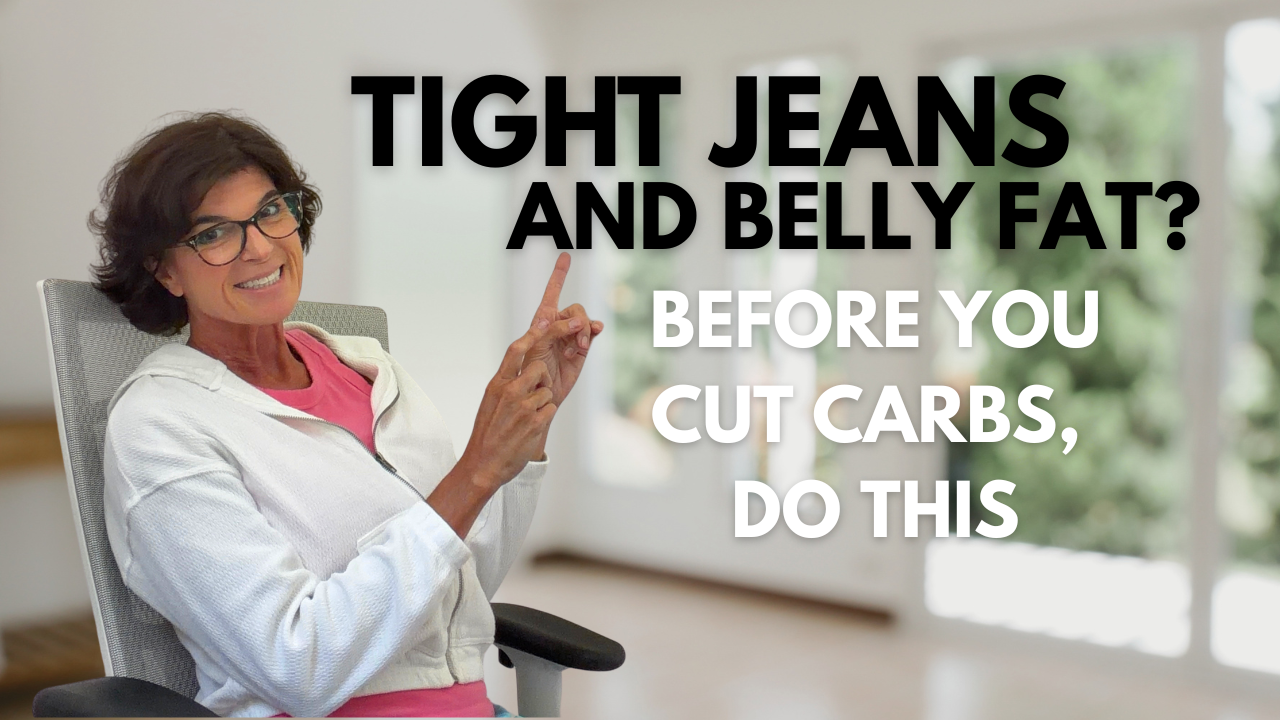
Tight Jeans and Belly Fat? Before You Cut Carbs, Do This
Apple Podcast - Spotify - YouTube
There is one unmistakable sign that fall is approaching that nobody puts on a cute seasonal mug:
The day you pull your jeans out of the closet.
You’ve spent the summer in dresses, stretchy shorts, and forgiving waistbands. Then one morning you pull on those jeans you haven’t worn in a while, do the familiar side-to-side wiggle, suck in your stomach, and try to button them.
And they feel tight.
Suddenly, one pair of jeans has you worrying about belly fat, weight gain, and whether you need to lose weight immediately.
Sister friend, I’ve been there.
It’s amazing how quickly a tight waistband can become evidence in our minds that everything has gone wrong.
“What happened?”
“Why is everything going straight to my stomach?”
“I knew I was gaining weight.”
“I need to cut carbs.”
“I should start fasting.”
“I need to do more cardio.”
Before long, one pair of jeans has become a medical report, a moral evaluation, and a prediction of your futu...
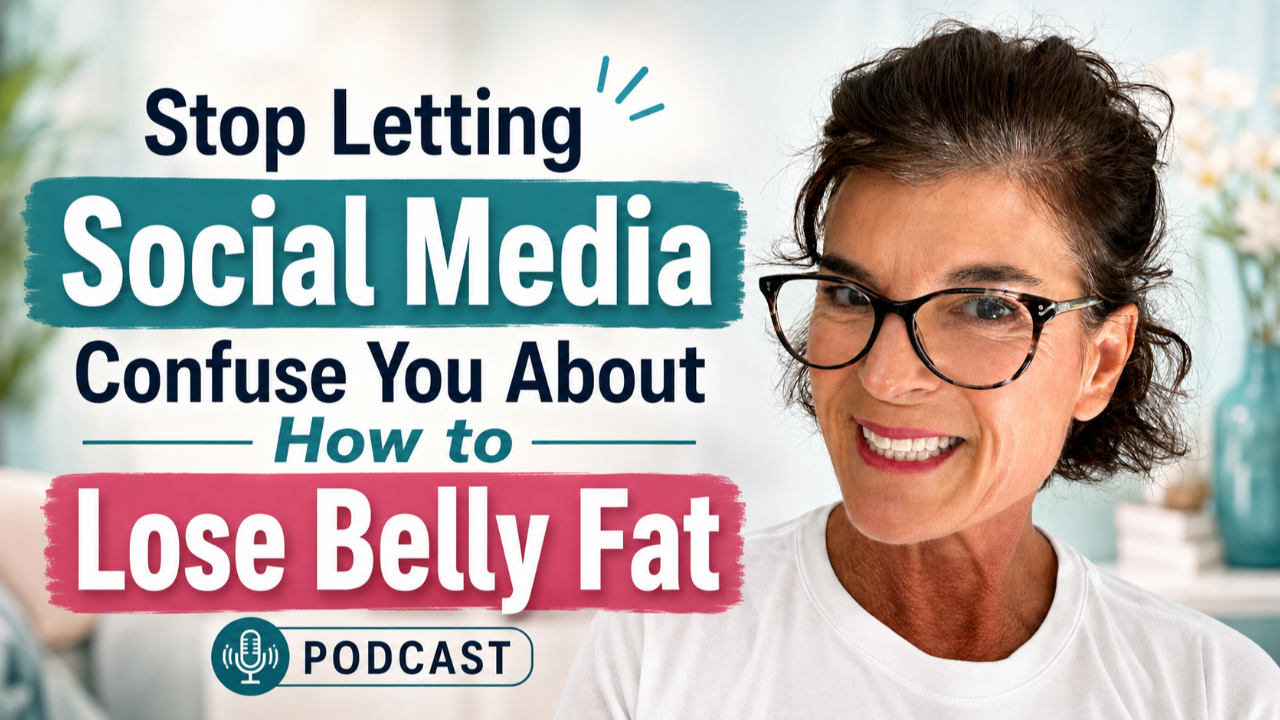
Stop Letting Social Media Confuse You About How to Lose Belly Fat
Apple Podcast - Spotify - YouTube
Have you ever scrolled social media and thought, “Wait—I thought I was supposed to eat breakfast. Or am I supposed to fast? Should I do more cardio? Less cardio? Lift heavy? Do HIIT? Eat protein before my workout or after?”
If you’re trying to lose stubborn belly fat after 40, all that conflicting information can leave you more overwhelmed than helped. And when you add changing hormones, lower energy, muscle loss, sleep changes, and a metabolism that doesn’t seem to respond the way it once did, it can feel like you need a degree in menopause just to figure out what to do for breakfast.
I see this with women I coach all the time. They aren’t lazy, and they don’t lack information. If anything, they have too much information. One expert says keto, another says fasting, someone else says carnivore, and then another tells you cardio is ruining your metabolism while someone else insists you need more of it. Meanwhile, you’re standing there wonder...
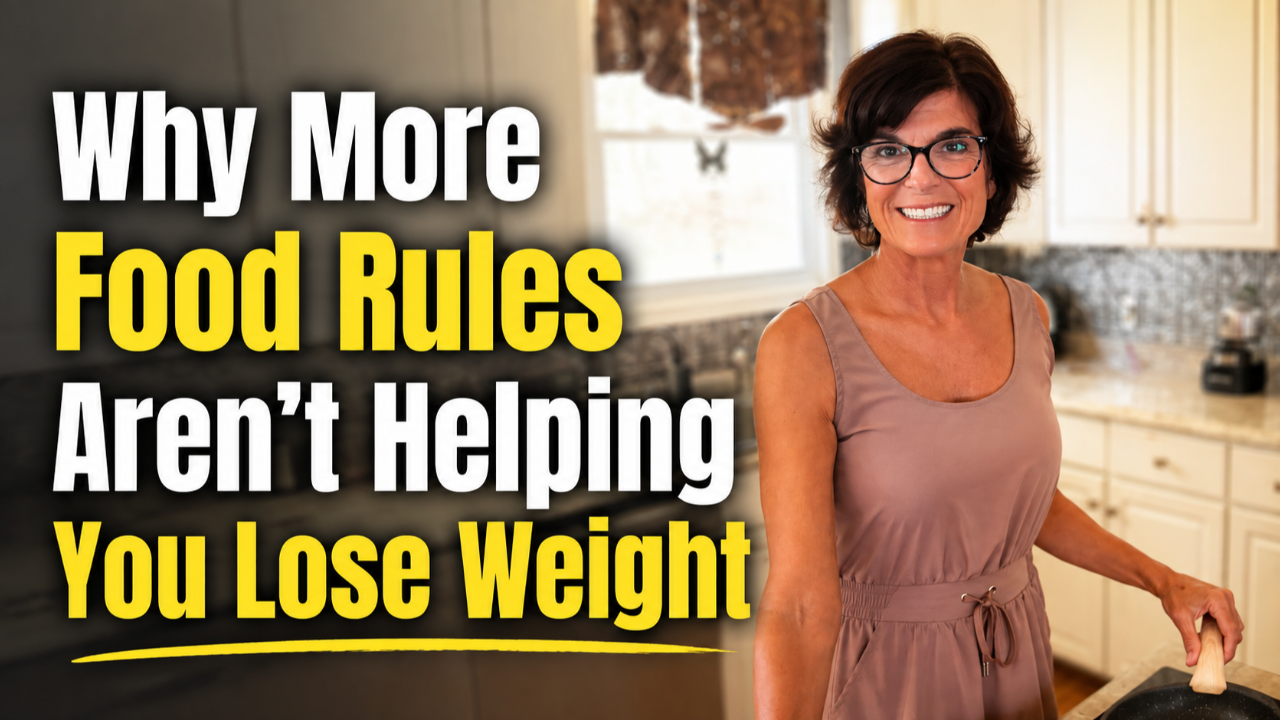
Why More Food Rules Aren’t Helping You Lose Weight
Apple Podcast - Spotify - YouTube
If you’re trying to lose weight, reduce stubborn belly fat, and finally build a healthy habit that actually lasts, it’s very easy to assume the solution is to tighten the rules. Many women in midlife fall into this pattern without even realizing it. They decide that if they could just be stricter, more disciplined, and more “on plan,” then everything would finally click into place. So they add more food rules, more restrictions, and more promises to themselves that this time they will do it perfectly.
The problem is that this approach often creates the very cycle they are trying to escape. For a few days, things go well. Meals feel controlled, choices feel intentional, and there is a sense of progress. But then real life happens—a birthday party, a dinner out, a stressful afternoon, or a vacation—and suddenly one unplanned food choice feels like a failure. Instead of adjusting and moving forward, the mind often jumps to, I already messed up, so...
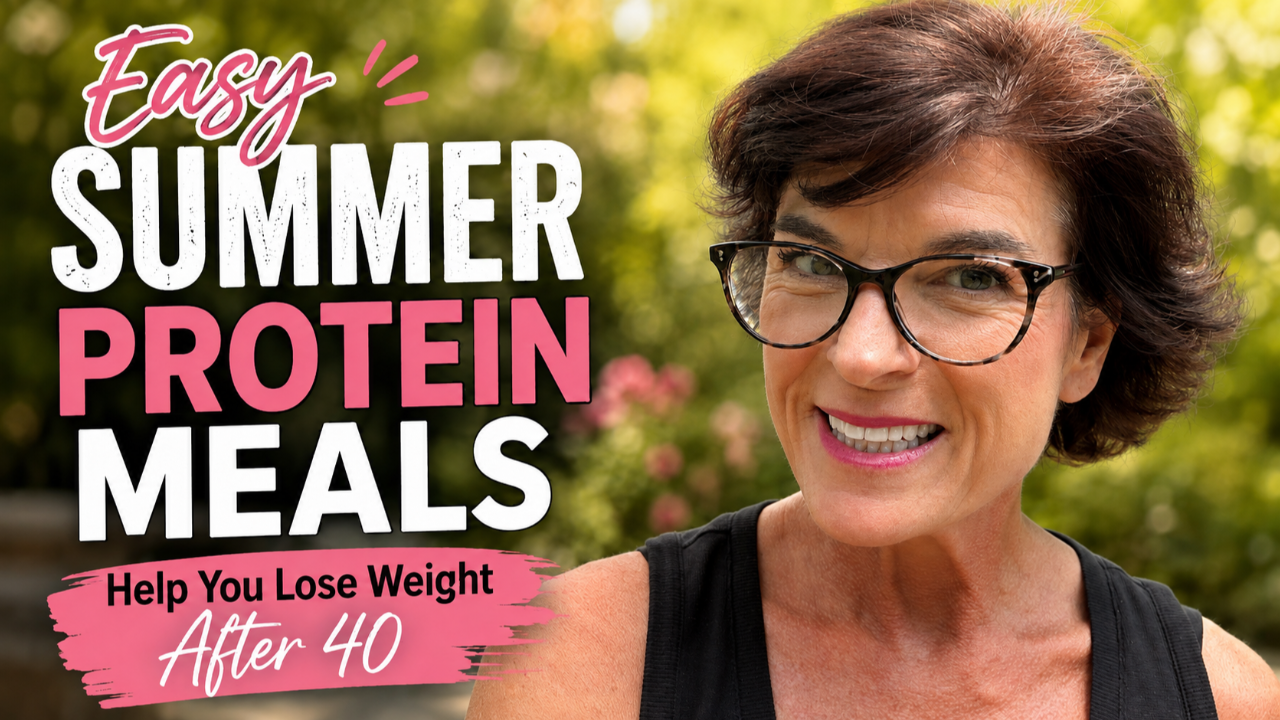
Easy Summer Protein Meals to Help You Lose Weight After 40
Apple Podcast - Spotify - YouTube
If you’re trying to lose weight, get enough protein, and work on stubborn belly fat this summer, you may be running into one very practical problem: you do not want to cook.
And honestly, I get it. It’s hot outside, the kitchen is hot, and the idea of standing over a stove making an elaborate dinner for an hour feels about as appealing as putting on a sweater and going for a walk at noon.
But when summer gets busy, it becomes really easy to fall into a cycle of grabbing chips, snacking through dinner, skipping meals, or deciding that watermelon is somehow a complete food group. Then a few hours later, your energy crashes, you’re hungry again, and you’re wondering why staying consistent feels so hard.
That’s where keeping protein for weight loss simple can make such a difference, especially for women in perimenopause, menopause, and beyond.
You do not need complicated recipes or hours of meal prep. You simply need a few easy meals you can ...
The Smarter Way to Lose Belly Fat After Menopause
Apple Podcast - Spotify - YouTube
If you are trying to lose weight after menopause and feel like your belly fat is refusing to budge, you may assume the answer is to eat less and exercise harder. Maybe you have added more cardio, searched for new belly fat loss workouts, or tried to tighten up your Trim Healthy meals even more.
But what if your body does not need more punishment?
What if the smarter way to lose belly fat after menopause is to walk more, build muscle, fuel your body well, move consistently, and support your metabolism instead of constantly pushing it?
That may not sound flashy or extreme. It will not grab attention like a dramatic detox or a workout promising to melt belly fat in seven days. But sustainable strategies are the ones that help us create lasting results—and sustainable always wins.
Why Belly Fat Loss Feels Different After Menopause
Many women reach perimenopause or menopause and suddenly feel like they are living in a different body.
You ...
How One Woman Changed Her Metabolism and Lost 20 Pounds
Apple Podcast - Spotify - YouTube
What do you do when you are eating healthy, exercising, and trying to follow the plan—but your metabolism and weight no longer seem to respond?
One of my clients came to me at 52 years old feeling completely discouraged. She had gained stubborn belly fat, her energy was low, and despite following Trim Healthy Mama most of the time, she could not seem to lose weight.
She felt like she was doing everything right. But like many women in perimenopause and menopause, she was still relying on the weight-loss strategies that had worked earlier in life: eating less, skipping meals, doing more cardio, and hoping the scale would finally cooperate.
Over the next several months, she learned how to strength train, eat enough protein, use carbohydrates strategically, support her blood sugar, improve her recovery, and address the mindset patterns that kept her starting over.
She did not fix her metabolism with a quick trick or an extreme plan. She supporte...
Ready for more real talk, fat loss tips, and hormone support made for midlife women?
Author

Kris Honeycutt
I’m a Trim Healthy executive coach, menopause fitness specialist, and personal trainer helping women over 40 lose stubborn weight, balance hormones, and feel confident in midlife bodies. Around here, we ditch diet drama and build real results—one wise, grace-filled step at a time.
Recent Posts

Join my Tribe today
How do you make Trim Healthy your lifestyle eating plan?
By getting community & coaching support.
Real change happens with accountability and habits. You get both inside Get Your Trim On Tribe Membership.
Get Your Trim On Store
Products that I have created to help you be successful in your Trim Healthy Mama journey.
What does Coach Kris buy from the THM store?
I am an official THM store affiliate and may earn a commission from purchases made through this link.
Baobab - Optimized Plant Protein - Optimized Whey Protein - Essential Amino Acids - No Carb Easy Bread
