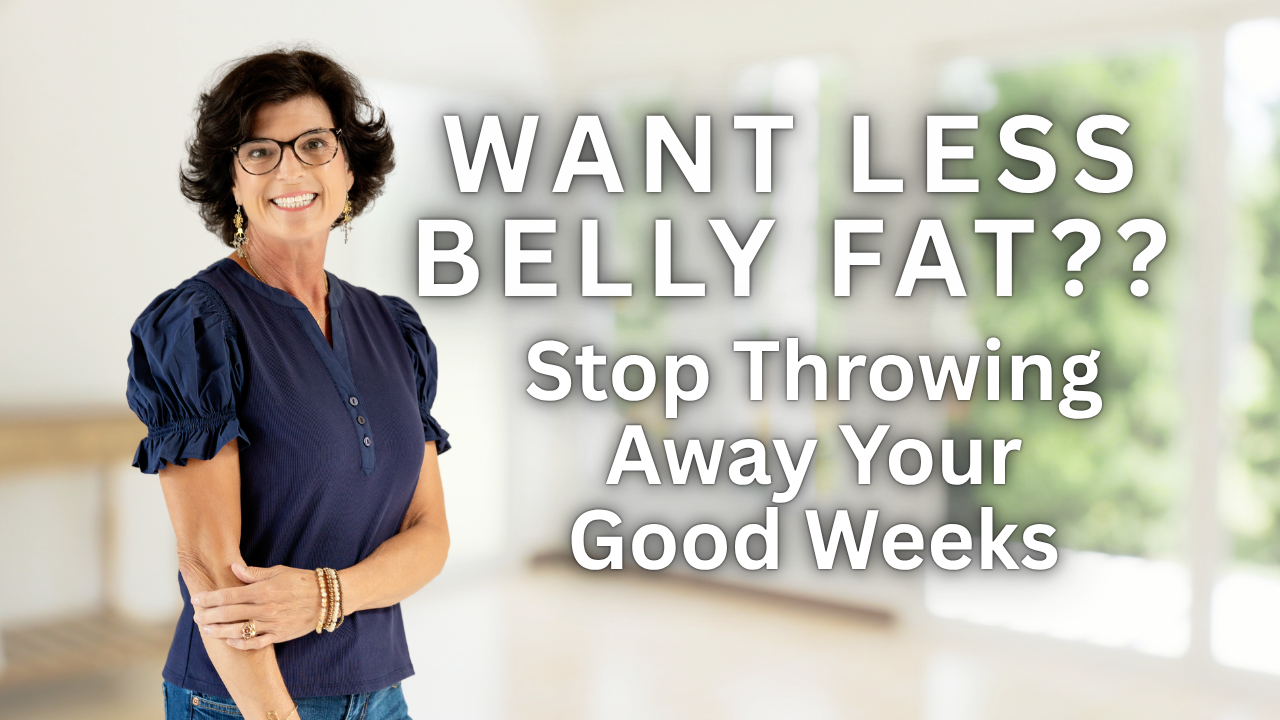
Want Less Belly Fat? Stop Throwing Away Your Good Weeks
Apple Podcast - Spotify - YouTube
Have you ever finished a week and thought, “Well, that wasn’t very impressive”?
You planned three strength training workouts but only completed two. You meant to walk every day, but you walked three times. You started with a beautiful Trim Healthy breakfast and a protein-centered lunch, and then dinner went completely sideways.
By the end of the week, you’re tempted to dismiss the whole thing because you didn’t follow your plan perfectly.
But those healthy habits still counted.
This matters when you’re trying to lose belly fat during perimenopause, menopause, or post-menopause. Your body may not give you the quick feedback it once did, but that doesn’t mean your consistent choices aren’t creating change.
Your Healthy Habits Are Building Something
Earlier in life, you may have been able to tighten things up for a week or two and see the scale move. You exercised a little harder, cut back on a few things, and your jeans started feeling ...
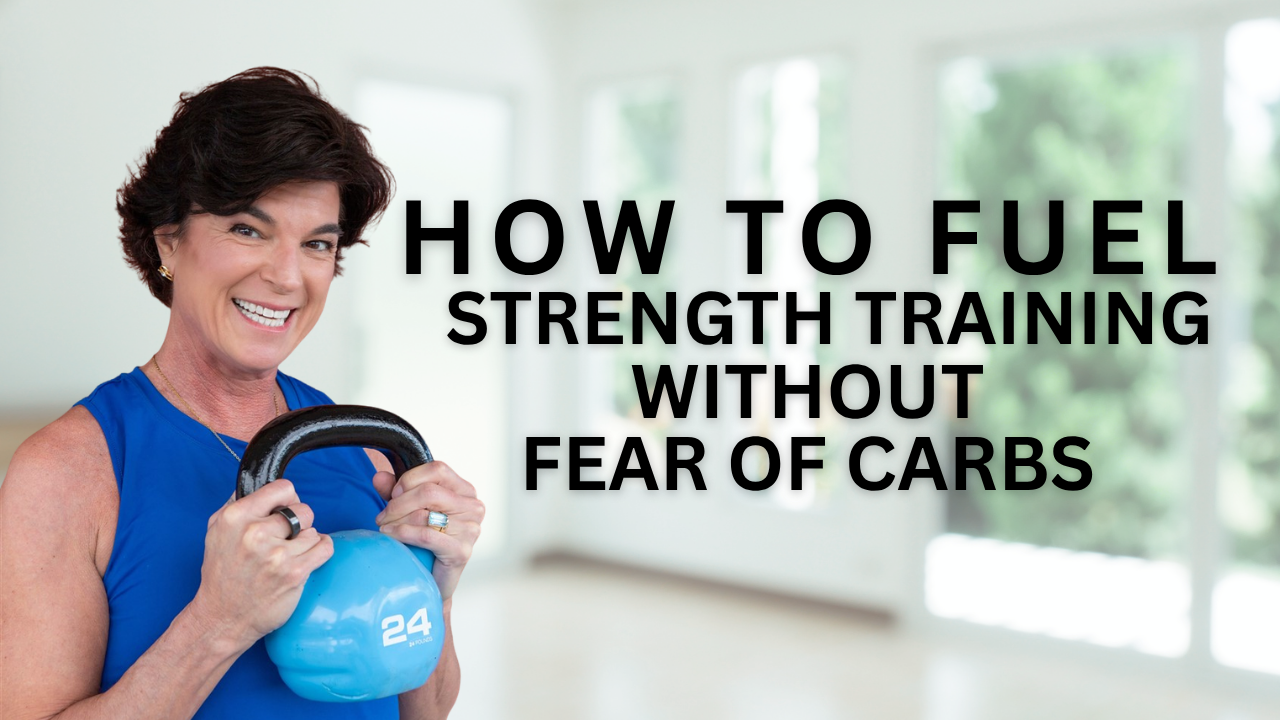
How to Fuel Strength Training Without Fear of Carbohydrates
Apple Podcast - Spotify - YouTube
If you’re a woman over 40, you may be wondering what to eat before and after strength training—especially if your goals include building muscle, losing stubborn belly fat, and having more energy.
There is so much conflicting information out there. Exercise fasted. Never exercise fasted. Avoid carbohydrates. Eat carbohydrates. Drink a protein shake immediately. Wait until your next meal. It’s enough to make you wonder if you need a nutrition degree just to complete your workout!
I want to simplify this for you.
Your midlife body needs adequate fuel to perform, recover, and build lasting muscle. That doesn’t mean you need a huge meal every time you pick up a dumbbell, but intense exercise during perimenopause, menopause, and post-menopause usually deserves more support than a cup of coffee and sheer determination.
Why Strength Training After 40 Requires Proper Fuel
Strength training sends an important message to your body.
When you challe...
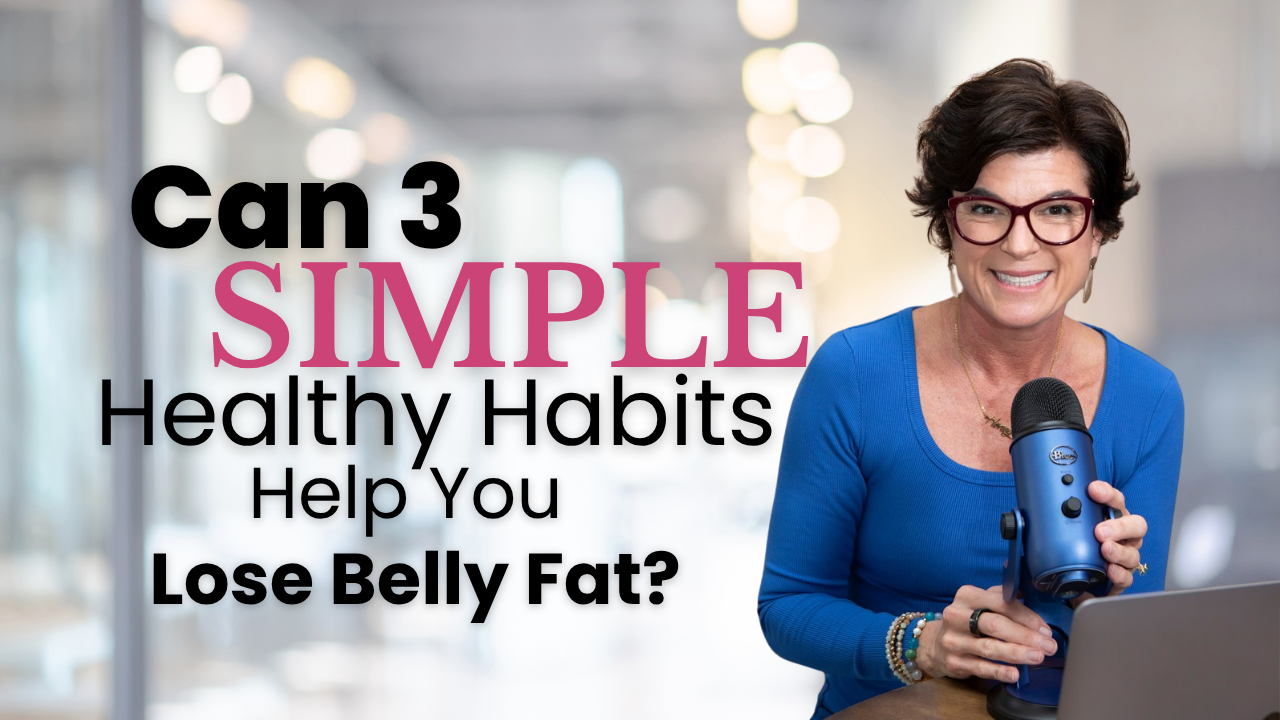
Can 3 Simple Healthy Habits Help You Lose Belly Fat?
Apple Podcast - Spotify - YouTube
If you want to lose weight, reduce stubborn belly fat, and feel stronger after 40, you may assume you need a complete overhaul. A stricter eating plan, longer workouts, a new supplement routine, and a long list of healthy habits can sound like the answer—especially when your body is no longer responding the way it did in your 30s.
But what if your midlife body doesn’t need more pressure? What if it needs a few simple habits that support your changing hormones, preserve your muscle, improve your sleep, and help you stay consistent?
As we move from summer into fall, many of us naturally begin craving more structure. Summer can feel a little like the Wild West with vacations, grandchildren, pool days, cookouts, and schedules that change from one week to the next.
Then September arrives with school, sports, church activities, appointments, Bible studies, birthdays, and thoughts of the holidays already creeping in. We want a fresh start, but we ca...
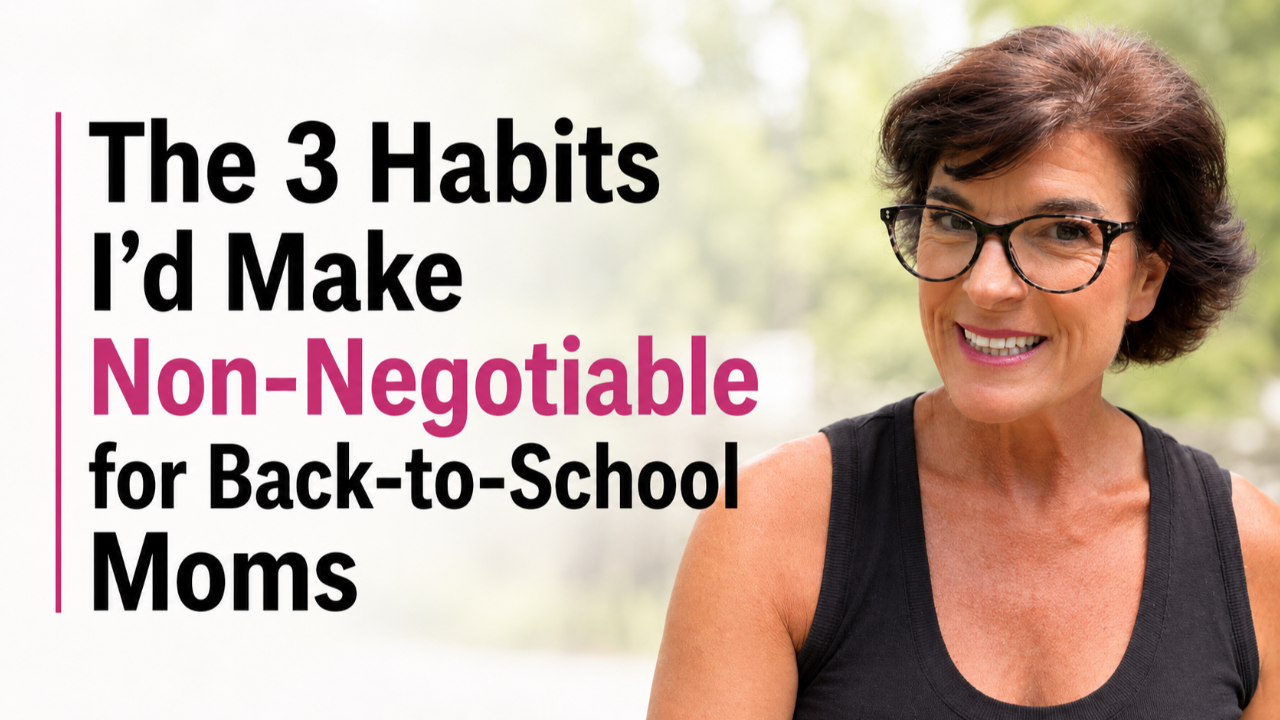
The 3 Habits I’d Make Non-Negotiable for Back-to-School Moms
Apple Podcast - Spotify - YouTube
Back-to-school season has a funny way of exposing every weak spot in our routines, doesn’t it?
One week you feel like you have your meals planned, your workouts happening, and a few healthy habits finally clicking. Then school starts, homeschooling ramps back up, appointments hit the calendar, somebody needs poster board at 8:30 at night, and suddenly you’re wondering when you’re supposed to take care of yourself.
If that sounds familiar, I want you to hear this: this is not the season to create a more complicated plan. It’s the season to simplify.
If you want to lose weight, high-protein meals, consistent movement, and strength training still matter. But you don’t have to execute all of them perfectly to make progress.
The goal during a busy season is to identify the few things that keep you connected to the woman you are becoming—and keep doing those things.
Back-to-School Weight Loss Doesn’t Require Doing Everything
One of the bigges...
Stop Letting Social Media Confuse You About How to Lose Belly Fat
Apple Podcast - Spotify - YouTube
Have you ever scrolled social media and thought, “Wait—I thought I was supposed to eat breakfast. Or am I supposed to fast? Should I do more cardio? Less cardio? Lift heavy? Do HIIT? Eat protein before my workout or after?”
If you’re trying to lose stubborn belly fat after 40, all that conflicting information can leave you more overwhelmed than helped. And when you add changing hormones, lower energy, muscle loss, sleep changes, and a metabolism that doesn’t seem to respond the way it once did, it can feel like you need a degree in menopause just to figure out what to do for breakfast.
I see this with women I coach all the time. They aren’t lazy, and they don’t lack information. If anything, they have too much information. One expert says keto, another says fasting, someone else says carnivore, and then another tells you cardio is ruining your metabolism while someone else insists you need more of it. Meanwhile, you’re standing there wonder...
Keep Getting Injured? How to Strength Train Wisely After 40
Apple Podcast - Spotify - YouTube
Have you ever felt like every time you finally get consistent with exercise, something starts hurting?
Your knee acts up. Your shoulder gets cranky. Your back tightens. Your foot begins to ache. You finally feel like you are making progress, and then your body waves a little white flag and says, “Not so fast.”
For many women in perimenopause, menopause, and post-menopause, this can feel especially discouraging. Hormone imbalance, slower recovery, joint pain, low energy, and muscle soreness can make it harder to strength train the way you used to.
And when your goal is strength training to lose weight, reduce stubborn belly fat, and build lasting muscle, an injury can feel like one more thing standing in your way.
I understand that frustration more than I wish I did.
Over the last several years, I have dealt with gluteal tendinopathy, a tear, arthritis in my hand, tennis elbow—which I lovingly call pickleball elbow—and pelvic floor issues...
6 Simple Ways to Turn On Fat Burning After 40
Apple Podcast - Spotify - YouTube
Does it feel like your body has forgotten how to burn fat?
You may be following Trim Healthy principles, choosing healthy foods, exercising, and trying to stay consistent, yet the belly fat will not budge. You want to lose weight, but the strategies that worked in your 20s and 30s do not seem to work the same way anymore.
That can feel discouraging, especially when you are genuinely trying.
But your body is not broken, my friend. It is simply responding differently because your hormones, muscle mass, blood sugar, stress levels, and recovery needs have changed.
After 40, fat loss is not about starving your body, cutting out every carbohydrate, or exercising until you are exhausted. It is about creating the right environment for your body to feel nourished, supported, strong, and safe enough to release stored fat.
These six simple strategies can help you turn fat burning back on while supporting your hormones, preserving muscle, and improv...
5 Strength Training Myths Keeping Women Over 40 Stuck
Apple Podcast - Spotify - YouTube
Have you ever found yourself wondering if you're doing the right workout?
Maybe you've questioned whether you're lifting heavy enough, exercising long enough, or following the best strength training program to lose weight. If so, you're not alone.
One of the biggest struggles I see among women in perimenopause and menopause isn't a lack of effort. It's confusion. Many women are working hard but still feel stuck because they've been following beliefs about exercise that simply aren't true.
The good news?
A major new research review from the American College of Sports Medicine confirms something I've been teaching for years as a personal trainer, menopause fitness specialist, and Trim Healthy Mama coach: strength training after 40 doesn't have to be complicated.
In fact, some of the beliefs keeping women stuck are actually preventing them from seeing results.
Let's talk about five of the biggest strength training myths and what the latest re...
The Truth About High Cortisol, Recovery, and Weight Loss After 40
Apple Podcast - Spotify - YouTube
If you're doing all the things—walking more, lifting weights, staying on plan, trying to lose weight—and yet you still feel exhausted, inflamed, sore, and stuck, I want to offer a different perspective.
What if your body doesn't need more effort?
What if it needs more recovery?
This is one of the biggest lessons I've learned both personally and as a menopause fitness specialist working with women in perimenopause and menopause. So many midlife women have spent decades believing that more is better. More exercise. More discipline. More restriction. More pushing through.
But after 40, our bodies often respond better to wisdom than willpower.
Today I want to talk about something that most women completely overlook: the deload week.
And honestly, it may be one of the missing pieces behind your fatigue, stalled fat loss, inflammation, soreness, and even symptoms of high cortisol.
What Is a Deload Week?
Let's keep this simple.
A deload ...
Can You Lose Weight Walking After 40? Here’s the Truth
Apple Podcast - Spotify - YouTube
There is absolutely a place for walking in midlife.
I walk almost every single day. I love it for stress relief, energy, fresh air, blood sugar support, and simply getting my body moving. Walking matters. Yoga matters. Pilates matters. Rebounding matters.
But if you are trying to lose belly fat after 40 and your body composition is not changing the way you hoped, there may be a missing piece.
And for many women, that missing piece is strength training.
So many women tell me, “Kris, I’m moving my body. I’m trying. I’m doing the things. Why isn’t my body changing?”
That question matters because your body is communicating with you.
In this season of perimenopause and menopause, the strategy that worked in your 20s and 30s often stops working the same way. Your body is asking for a new approach.
If your goal is strength training to lose weight, support hormones, improve metabolism, and age well, this conversation is important.
Why Midl...
Ready for more real talk, fat loss tips, and hormone support made for midlife women?
Author
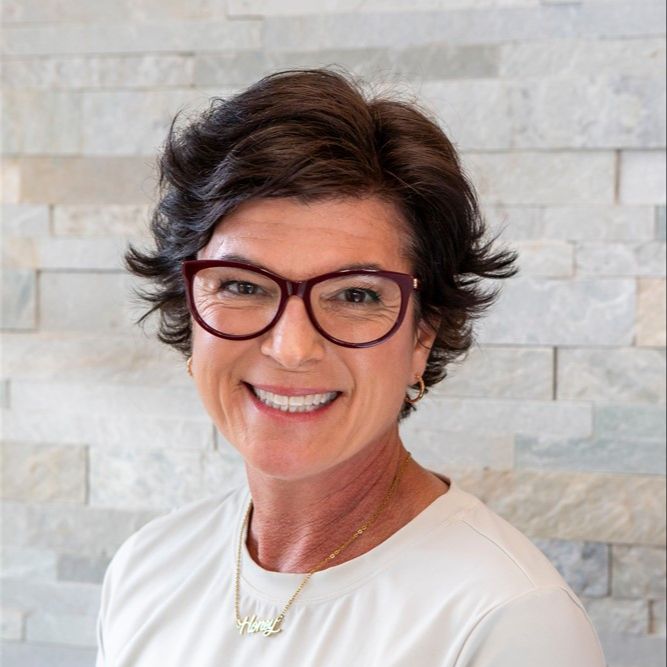
Kris Honeycutt
I’m a Trim Healthy executive coach, menopause fitness specialist, and personal trainer helping women over 40 lose stubborn weight, balance hormones, and feel confident in midlife bodies. Around here, we ditch diet drama and build real results—one wise, grace-filled step at a time.
Recent Posts

Join my Tribe today
How do you make Trim Healthy your lifestyle eating plan?
By getting community & coaching support.
Real change happens with accountability and habits. You get both inside Get Your Trim On Tribe Membership.
Get Your Trim On Store
Products that I have created to help you be successful in your Trim Healthy Mama journey.
What does Coach Kris buy from the THM store?
I am an official THM store affiliate and may earn a commission from purchases made through this link.
Baobab - Optimized Plant Protein - Optimized Whey Protein - Essential Amino Acids - No Carb Easy Bread
