Hormone Imbalance or Thyroid? How to Tell What’s Going On
Apple Podcast - Spotify - YouTube
The Menopause Makeover Podcast Blog | Coach Kris Honeycutt
You’re tired, your hair seems thinner, your body feels puffy, and you cannot lose weight the way you used to. Then your doctor checks your thyroid on blood work and tells you everything looks normal. So now what? Is this hormone imbalance, a thyroid issue, or simply another part of menopause you are expected to live with?
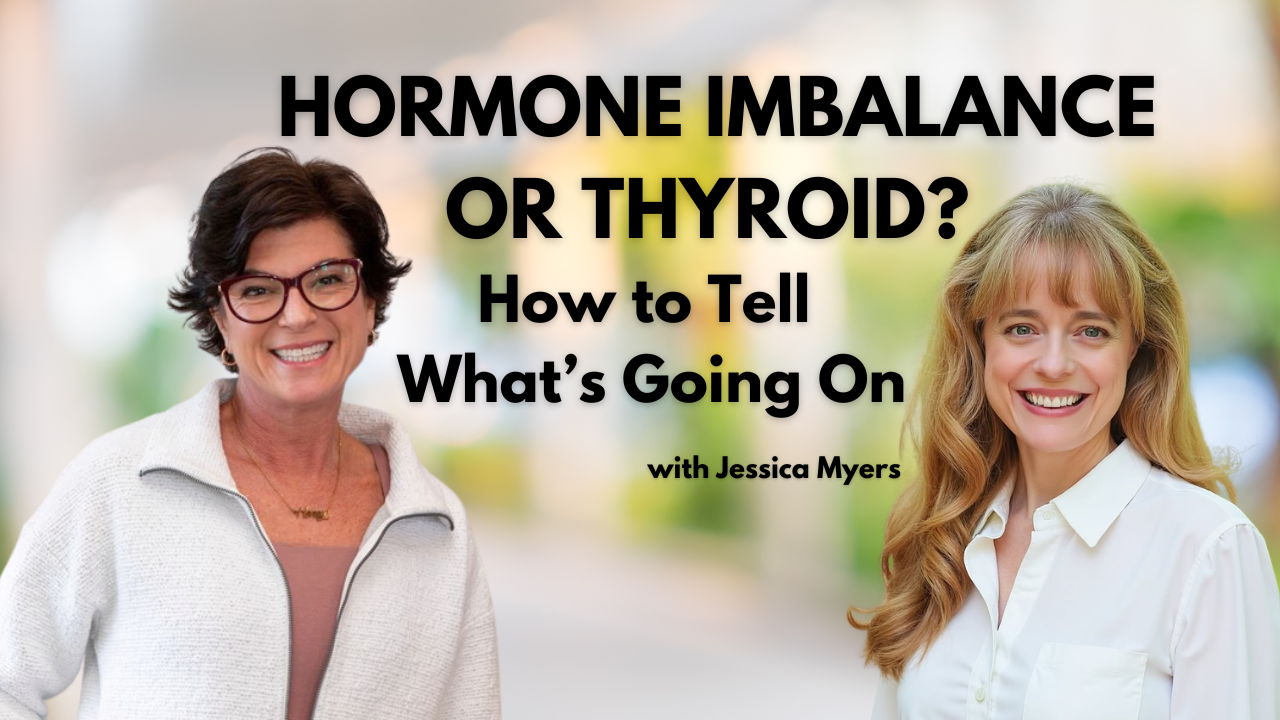
This is exactly why I invited Jessica Myers, Chief Experience Officer at Kiaora, back to The Menopause Makeover Podcast. We had already talked about sex hormones, but this time we turned our attention to the thyroid - a small gland that can have a big influence on energy, temperature regulation, digestion, mood, and metabolism.
This conversation is personal for me. Years ago, I looked healthy from the outside, but I spent close to a decade in a health crisis without clear answers. Finding an integrative practitioner who diagnosed Hashimoto’s disease became an important turning point in my own health journey.
If you are doing many good things with your Trim Healthy meals, movement, and strength training but still feel unlike yourself, this episode will help you ask better questions. It will also help you understand why menopause and thyroid symptoms can be so difficult to separate.
Hormone Imbalance or Thyroid? Why the Symptoms Overlap
Perimenopause and menopause can affect sleep, mood, body composition, energy, memory, and temperature regulation. An underactive thyroid can cause fatigue, weight gain, difficulty tolerating cold, joint and muscle discomfort, constipation, dry skin, thinning hair, and changes in menstrual cycles. No wonder women are confused.
The National Institute of Diabetes and Digestive and Kidney Diseases lists many of those symptoms as common signs of hypothyroidism. But symptoms alone cannot tell us the cause. Fatigue may be connected to thyroid function, shifting estrogen and progesterone, poor sleep, iron status, chronic stress, inadequate nourishment, or several of those factors at once.
That is why I do not want you blaming every midlife struggle on menopause - or assuming every stubborn pound means your thyroid is failing. Your symptoms are clues. They deserve to be considered alongside your health history, medications, nutrition, stress, sleep, and appropriate laboratory testing.
For many women, the best next step is not another stricter eating plan. It is a thoughtful conversation with a qualified medical provider who is willing to listen to the whole story.
What Does Your Thyroid on Blood Work Actually Show?
When women say they had a thyroid test, they are often talking about TSH. TSH stands for thyroid-stimulating hormone. It is produced by the pituitary gland and signals the thyroid to make thyroid hormones.
TSH is an important first-line test, and mainstream thyroid organizations consider it one of the most useful tools for detecting thyroid dysfunction. A higher-than-normal TSH often points toward an underactive thyroid, while a lower-than-normal TSH can point toward an overactive thyroid. However, providers frequently interpret TSH together with Free T4 and the woman’s clinical picture.
Free T4 measures the portion of thyroxine that is not bound to proteins and is available to tissues. T4 is the primary hormone produced by the thyroid and can be converted in the body to T3, the more active form.
Jessica explained why Kiaora’s approach looks beyond a basic TSH result. Their clinicians may evaluate TSH, Free T4, Free T3, and Reverse T3 as part of their optimization process. That is their clinical framework, and it is important to know that not every physician or professional organization interprets these additional tests in the same way.
Do You Need Free T3 and Reverse T3?
Free T3 measures unbound triiodothyronine, the active thyroid hormone circulating in the blood. Some integrative and functional providers use it when symptoms continue despite results that fall within a laboratory reference range.
You do not have to become your own endocrinologist or chase a perfect number from something you saw online. You can ask your provider what was tested, request a copy of your results, describe your symptoms clearly, and ask how the numbers were interpreted in the context of your health.
When Thyroid Antibodies May Matter
Because Hashimoto’s disease is an autoimmune condition, thyroid antibody testing may be appropriate when a provider suspects it. TPO antibodies are commonly checked as part of that evaluation, although your provider may order other tests depending on your history.
This mattered in my story because I did not simply need someone to tell me I was tired. I needed help identifying why my body was struggling. Getting the right diagnosis allowed me to stop guessing and begin making informed decisions with my practitioner.
Why It May Feel Harder to Lose Weight With Thyroid Symptoms
One of the biggest questions women bring to me is, “Could my thyroid be why I cannot lose weight?” An underactive thyroid can contribute to weight gain and make weight management more difficult, but thyroid function is rarely the only piece of the puzzle.
In midlife, we may also be dealing with declining muscle mass, less daily movement, disrupted sleep, insulin resistance, stress, and changes in where the body stores fat. That means we still want to support the habits that protect our metabolism: adequate protein, progressive strength training, regular movement, restorative sleep, and meals that truly nourish us.
Jessica shared that before receiving thyroid support, maintaining her 150-pound weight loss had become exhausting. She felt she had to stay hungry to keep the weight from returning. After working with her medical team and finding an appropriate treatment plan, she said she was able to eat to satisfaction and maintain more comfortably.
Her experience is powerful, but thyroid medication is not a weight-loss drug, and it should never be used simply to speed up metabolism. Too much thyroid hormone can cause serious problems, including a racing heart, sleep disruption, bone loss, and other signs of thyrotoxicosis. Treatment should be prescribed and monitored for a diagnosed thyroid condition by a qualified clinician.
Can Trim Healthy Eating Support Your Thyroid?
This is where women can accidentally work against themselves. When weight loss slows, the temptation is to cut harder: fewer calories, fewer carbohydrates, longer fasts, and more exercise. But your body still needs enough energy and nutrients to function well.
Within Trim Healthy Mama, healthy carbohydrates are not the enemy. Eneregizing meals can give us fuel from foods such as oats, beans, fruit, quinoa, sweet potatoes, and sprouted grains while keeping added fats lighter. Crossovers can also have a helpful place when a woman needs more nourishment, is highly active, is recovering, or notices that her body is not thriving on very lean meals all the time.
The goal is not to force a certain number of E meals because someone else eats that way. It is to notice whether you are consistently under-fueling, afraid of healthy carbohydrates, or trying to earn faster results by staying hungry.
A steady Trim Healthy plate can include a solid protein anchor, plenty of plants, and the fuel that fits the meal. Pair that with strength training so the nourishment has somewhere productive to go: toward recovery, energy, and the lasting muscle we want to build after 40.
What to Know About Thyroid Medication
Levothyroxine, a synthetic form of T4, is the standard treatment for hypothyroidism and works well for many people. Jessica and I also discussed combination therapy using T4 and T3, which may be considered in selected patients who continue to have symptoms under medical supervision. Research has not shown that combination therapy is better for everyone, so this needs to be an individual decision between a patient and a knowledgeable prescriber.
If you take levothyroxine, absorption matters. The American Thyroid Association notes that food, coffee, iron, calcium, and certain medications can interfere with absorption. Patients are commonly instructed to take it consistently on an empty stomach and wait 30 to 60 minutes before eating, but always follow the directions given with your specific prescription.
Consistency matters because changing the timing or what you take alongside your medication can change how much your body absorbs. If your morning routine is difficult, ask your pharmacist or prescriber about safe timing options instead of creating your own protocol.
Thyroid treatment also takes patience. Prescribers usually start carefully, recheck labs after the body has had time to respond, and adjust when needed. More is not automatically better, and getting the dose right may require several rounds of follow-up.
A Simple Thyroid Test Conversation to Have With Your Doctor
You do not need to walk into your appointment demanding a long list of tests. You can begin with a clear description of what has changed and how long it has been happening.
You might say: “I have been experiencing persistent fatigue, cold sensitivity, constipation, hair changes, and difficulty managing my weight. Could my thyroid be contributing? Which thyroid tests have been run, and would TSH, Free T4, or thyroid antibody testing be appropriate for me?”
If you are already taking thyroid medication but still feel unwell, ask whether the medication timing, absorption, dose, other medications, iron status, sleep, or another condition could be contributing. Ask what follow-up is appropriate rather than adjusting medication on your own.
Jessica also offers a free 15-minute consultation for women who want to learn about Kiaora’s thyroid and hormone services. She is not a medical professional, but she can explain their process and help you decide whether speaking with one of their licensed providers makes sense for you.
Your Body Deserves Curiosity, Care, and Wise Support
I believe God designed our bodies with wisdom, and caring for them is part of faithful stewardship. Psalm 139 reminds us that we are fearfully and wonderfully made. That does not mean our bodies will never need medical support; it means we can approach them with respect instead of frustration and punishment.
And if you are ready to stop collecting information and start applying it, I would love to coach you inside my Belly Fat Breakthrough Tribe. We take the confusion around midlife fat loss, Trim Healthy eating, movement, hormones, and mindset and turn it into simple steps you can actually follow.
You do not need another season of eating less, exercising harder, and wondering why your belly will not budge. Come join us as we work toward shedding stubborn belly fat, getting fit and strong, and building the lasting muscle your midlife body needs.
Ready to Take a Closer Look at Your Thyroid?
If this episode left you wondering whether your thyroid may be contributing to your fatigue, stubborn weight, hair changes, cold sensitivity, or other midlife symptoms, you can schedule a free 15-minute consultation with Jessica Myers from Kiaora.
Jessica will walk you through Kiaora’s thyroid program, explain the testing and optimization process, and help you decide whether it may be a good next step for you.
When you’re ready to place your first thyroid order, use discount code KRIS10 to save 10%.
Medical note: This article is educational and is not a substitute for individualized medical advice, diagnosis, or treatment. Thyroid testing and medication decisions should be made with a qualified medical professional.
Ready for more real talk, fat loss tips, and hormone support made for midlife women?
Author

Kris Honeycutt
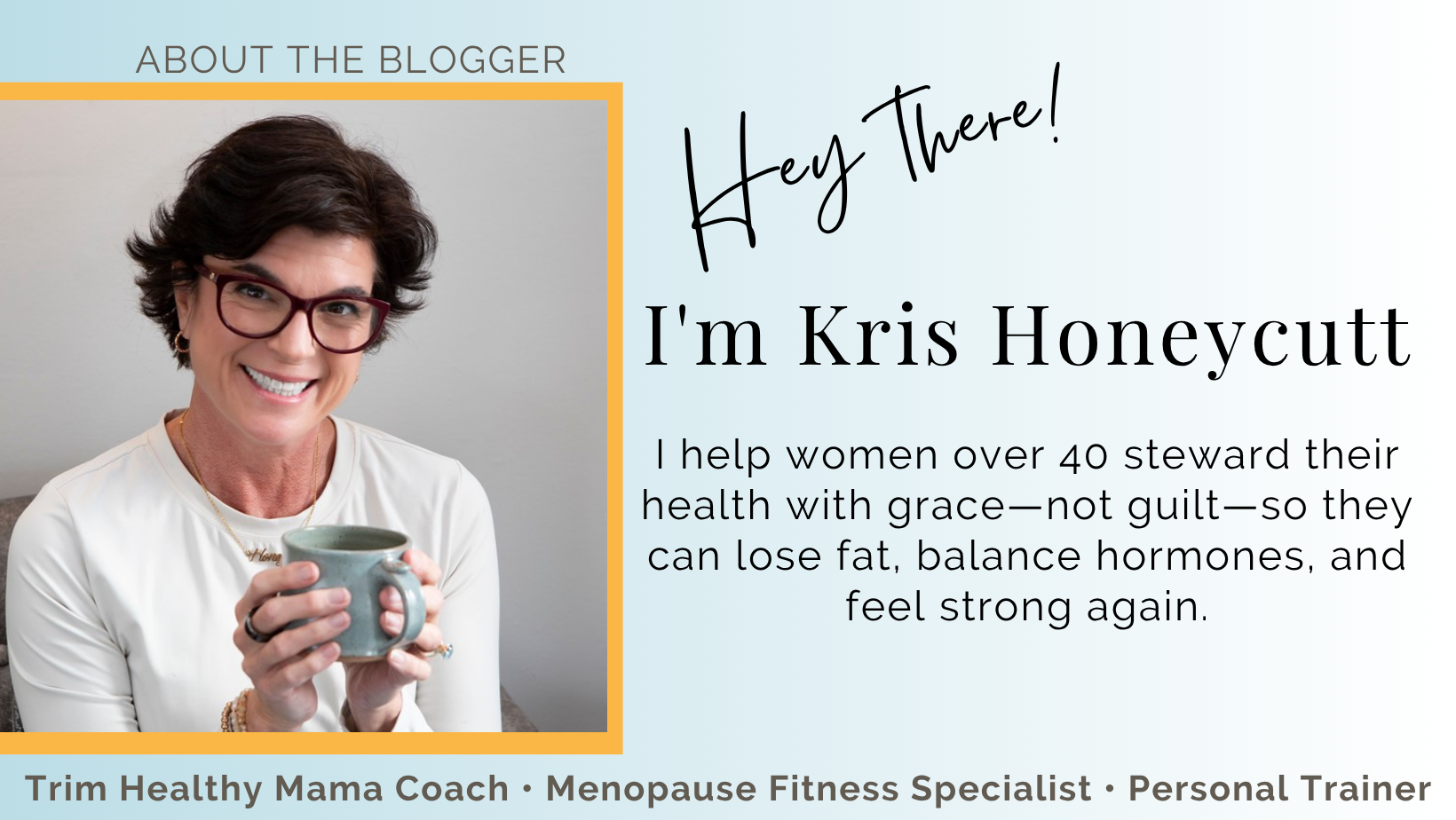
I’m a Trim Healthy executive coach, menopause fitness specialist, and personal trainer helping women over 40 lose stubborn weight, balance hormones, and feel confident in midlife bodies. Around here, we ditch diet drama and build real results—one wise, grace-filled step at a time.
Recent Posts

Join my Tribe today
How do you make Trim Healthy your lifestyle eating plan?
By getting community & coaching support.
Real change happens with accountability and habits. You get both inside Get Your Trim On Tribe Membership.
Get Your Trim On Store
Products that I have created to help you be successful in your Trim Healthy Mama journey.
What does Coach Kris buy from the THM store?
I am an official THM store affiliate and may earn a commission from purchases made through this link.
Baobab - Optimized Plant Protein - Optimized Whey Protein - Essential Amino Acids - No Carb Easy Bread
