The Hidden Thyroid Issue Blocking Weight Loss After 40
Apple Podcast - Spotify - YouTube
The issue isn’t that your thyroid is “bad.”
It’s that it may not be optimized for midlife.
Most women are told their thyroid is fine based on a single lab value. But thyroid health is not one number—and in menopause, that narrow view misses a lot.
Why “Normal” Thyroid Labs Don’t Mean Your Thyroid Is Working Well
Most conventional doctors are trained to look at TSH only. That’s not because they’re careless—it’s simply how they were trained.
But TSH is just a signal from your brain. Think of it like an alarm clock. Just because it’s ringing doesn’t mean you’re awake, energized, and functioning well.
TSH alone does not tell us:
- Whether your thyroid is producing enough hormone
- Whether your body is converting hormone properly
- Whether autoimmune antibodies are involved
- Whether your cells are actually using the hormone available
This is why so many midlife women are told everything looks “fine” while their body is clearly struggling.
If you’re over 40 and struggling to lose weight—especially belly fat—you may not be doing anything wrong at all. You might be eating well, following Trim Healthy principles, staying active, and genuinely trying to take care of your body… yet the scale won’t move, your energy feels low, and the brain fog is real. For many midlife women, there’s a hidden thyroid issue quietly blocking weight loss—one that often gets missed because labs are labeled “normal.” And in this season of hormone shifts, that difference between normal and optimal matters more than we’ve ever been taught.
As a Trim Healthy coach, personal trainer, and menopause fitness specialist, I see this pattern constantly. Women come to me frustrated, confused, and often discouraged because they feel like they’re doing everything “right,” yet their body isn’t responding the way it used to. And one of the first places I look—especially when weight loss is stalled and energy is low—is thyroid health.
Why Weight Loss Feels So Hard After 40 (Even When You’re Doing Everything Right)
Midlife changes the rules.
Hormones shift. Recovery takes longer. Stress hits harder. Muscle mass is easier to lose and harder to rebuild if we’re not intentional. And the strategies that once worked—eating less, exercising more, pushing harder—often stop working altogether.
That doesn’t mean you’ve failed. It means your body is changing.
In perimenopause and menopause, your metabolism becomes more sensitive to stress, undereating, overtraining, and nutrient depletion. Your body is no longer impressed by willpower. It’s responding to signals of safety—or lack of it.
This is why so many women feel stuck despite following Trim Healthy principles, prioritizing protein, and staying consistent. When the internal systems that regulate energy and metabolism aren’t supported, effort alone won’t move the needle.
And this is where the thyroid quietly enters the conversation.
The Hidden Thyroid Issue Most Women Over 40 Aren’t Tested For
Here’s what I hear all the time:
“My doctor said my thyroid labs are normal.”
And yet…
- You’re exhausted
- You’re gaining or can’t lose weight
- You feel mentally foggy
- Your motivation feels flat
How Thyroid Dysfunction Blocks Weight Loss in Midlife
Your thyroid is your metabolic engine. When it’s under-supported, everything downstream slows.
A sluggish or stressed thyroid can:
- Reduce metabolic rate
- Increase fat storage (especially around the belly)
- Lower energy, making movement harder
- Increase cravings and blood sugar instability
- Amplify hormone imbalance
This isn’t about eating too much or moving too little. It’s about your body protecting itself.
When your thyroid senses stress—from undereating, chronic dieting, excessive cardio, lack of sleep, or menopause itself—it can apply the metabolic brakes. Fat loss stalls not because your body is stubborn, but because it’s trying to keep you safe.
Brain Fog, Fatigue, and Hormone Imbalance Are Clues—Not Character Flaws
This is important, so hear me clearly.
Brain fog is not laziness.
Low motivation is not a moral failure.
Stalled weight loss is not a discipline problem.
These are signals.
Brain fog, forgetfulness, feeling mentally “offline,” fatigue that doesn’t resolve with rest—these are all clues that something deeper needs support. In midlife, thyroid function and hormone balance are tightly connected, which is why symptoms often overlap.
Your body isn’t fighting you. It’s communicating.
The Thyroid–Hormone Connection Women Over 40 Need to Understand
The thyroid does not operate in isolation.
Its function is influenced by:
- Chronic stress and cortisol
- Undereating or low-carb extremes
- Gut health (where hormone conversion happens)
- Nutrient status (iron, iodine, selenium, zinc)
- Inflammation and autoimmune activity
- Menopause-related estrogen shifts
This is why the old advice—“eat less and exercise more”—often backfires in midlife. It ignores the hormonal environment your body is navigating.
When thyroid function improves, women often notice:
- Better energy
- Clearer thinking
- Improved mood
- Renewed fat loss response
Not because they changed their worth ethic—but because their body finally had the support it needed.
What to Do If Thyroid Issues Are Blocking Your Weight Loss
You don’t need to become a thyroid expert. You just need better information and support.
Here’s a simple place to start.
One helpful checklist to advocate for yourself:
- Ask for a full thyroid panel, not just TSH
- Track symptoms alongside lab results
- Notice patterns with stress, sleep, and food intake
- Work with a provider who understands optimization, not just averages
If your current doctor isn’t open to looking deeper, that doesn’t mean you’re stuck. There are integrative and functional practitioners—both local and online—who specialize in this area.
And if navigating this feels overwhelming, you don’t have to do it alone.
You’re Not Failing—Your Body Is Asking for Support
I want to end this where it truly belongs.
If your labs are “normal” but you feel exhausted, foggy, frustrated, and stuck—your experience is valid. Your symptoms matter. And your health is worth fighting for.
Midlife is not a sentence of decline. It’s an invitation to listen more closely, respond more wisely, and support your body differently than you did before.
Normal is not the goal.
Optimal is.
And when your thyroid, hormones, nourishment, and movement come into alignment, your body can respond again—with energy, clarity, and confidence.
If you can’t lose weight after 40 and feel tired, foggy, or hormonally off, a hidden thyroid issue may be part of the picture. “Normal” labs don’t always reflect optimal function—especially in midlife. When you stop blaming yourself and start supporting your body, fat loss, energy, and clarity become possible again.
I am not a medical professional. As a Trim Healthy Mama coach, I am not providing healthcare, medical, or nutritional therapy services or attempting to diagnose, treat, prevent, or cure any physical, mental, or emotional issue. The information provided on this website is for informational purposes only and is not intended to substitute professional medical advice, diagnoses, or treatment. Always seek advice from your physician or other qualified healthcare provider before undertaking a new health regimen. Do not disregard medical advice or delay seeking medical advice because of information you read on this website. Do not start or stop any medications without speaking to your medical or health provider.
Ready for more real talk, fat loss tips, and hormone support made for midlife women?
Author

Kris Honeycutt
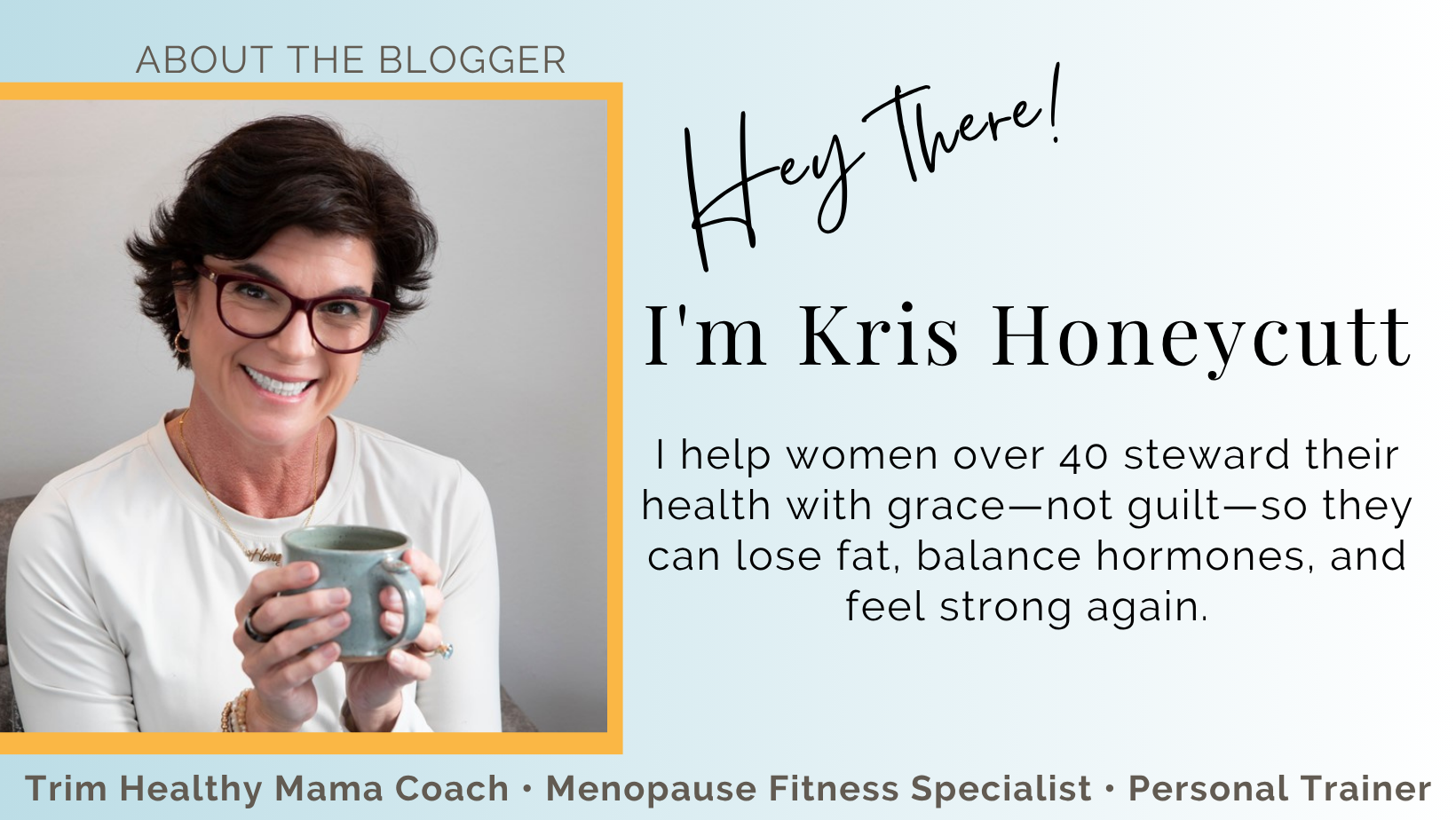
I’m a Trim Healthy executive coach, menopause fitness specialist, and personal trainer helping women over 40 lose stubborn weight, balance hormones, and feel confident in midlife bodies. Around here, we ditch diet drama and build real results—one wise, grace-filled step at a time.
Recent Posts

Join my Tribe today
How do you make Trim Healthy your lifestyle eating plan?
By getting community & coaching support.
Real change happens with accountability and habits. You get both inside Get Your Trim On Tribe Membership.
Get Your Trim On Store
Products that I have created to help you be successful in your Trim Healthy Mama journey.
What does Coach Kris buy from the THM store?
I am an official THM store affiliate and may earn a commission from purchases made through this link.
Baobab - Optimized Plant Protein - Optimized Whey Protein - Essential Amino Acids - No Carb Easy Bread
