5 Negative Thoughts Keeping You Stuck (And How to Flip Them)

Apple Podcast - Spotify - YouTube
Have you ever caught yourself thinking, "I just can't lose weight anymore," or "I know what to do, but I can't seem to make myself do it"? These negative thoughts can become so familiar that we don't even recognize how much they're influencing our choices. And when you're already dealing with stubborn belly fat, shifting hormones, and the challenges of losing weight after 40, the last thing you need is a mindset that's making consistency even harder.
I've coached so many women who know their Trim Healthy Mama plan inside and out. They understand S and E meals, know how important protein is, and recognize that strength training matters. Yet they still struggle to follow through consistently, especially when the scale doesn't move or life gets stressful.
I understand that frustration because I've had to work through some of these same thought patterns myself. As a Trim Healthy Mama Executive Coach, personal trainer, and Menopause Fitness Specialist, I've learned that helping women change their mindset can be just as valuable as helping them improve their eating and exercise habits.
Today, I want to share five negative thinking habits that can interfere with your weight loss progress and, more importantly, how you can begin changing them. We'll also look at what Scripture teaches about renewing our minds because lasting transformation involves more than the number on the scale.
Can Negative Thinking Really Affect Your Weight Loss?
I recently listened to part of a conversation between Lewis Howes and Price Pritchett about personal growth and what Pritchett calls quantum leaps. One idea caught my attention: What if reducing negative thinking is just as important as increasing positive thinking?
We hear a lot about the power of positive thinking. We're encouraged to believe in ourselves, speak affirmations, and focus on what we want to accomplish. There's value in those practices, but I started thinking about how often we try to add encouraging thoughts while continuing to rehearse negative beliefs we've carried around for years.
It's like trying to fill a bucket that has a hole in the bottom. We keep pouring in encouragement, but the old thinking patterns are still influencing our attitudes and actions.
I've experienced this in my own life. I'll find myself mentally replaying a frustrating situation, thinking about everything that's wrong, and feeling increasingly discouraged. I might try to insert a positive thought here and there, but if I keep returning to the same negative story, it's difficult to move forward.
Our brains become efficient at repeating familiar patterns. The more often we practice a particular way of thinking, the more automatic it can become. The encouraging part is that our brains can also learn new patterns through a process called neuroplasticity, which is the brain's ability to adapt through learning and experience.
This matters for weight loss because our thoughts influence how we interpret setbacks, approach challenges, and follow through with healthy habits. A woman who believes she's incapable of being consistent may respond to a missed workout very differently from a woman who believes she's learning how to build consistency.
Of course, mindset is only one part of the picture. Hormonal changes during perimenopause and menopause, sleep disruptions, medical conditions, medications, and changes in muscle mass can all influence body composition and weight management. Changing your thoughts won't eliminate those physical challenges, but it can help you make wiser decisions as you navigate them.
Let's look at five negative thought patterns that I frequently see keeping women stuck.
1. Complaining: The Negative Thought That Keeps You Focused on What's Wrong
Complaining is one of those habits that can sneak into our thinking without us even realizing it. I'm pretty good at this one myself, and sometimes my husband is the one who brings it to my attention!
When it comes to losing weight after 40, complaining can sound like, "It's so much harder to lose weight now," or "I hate having to think about everything I eat." We start focusing on how difficult things have become, especially when the food and exercise routines that worked in our thirties don't seem to produce the same results anymore.
There's an important difference between acknowledging a genuine challenge and repeatedly complaining about it. Menopause does bring physical changes, and managing those changes can require adjustments to our nutrition, movement, and recovery. We need to recognize those realities so we can address them appropriately.
The problem develops when we continually rehearse how unfair or difficult everything is. Over time, that kind of thinking can leave us feeling powerless, and when we feel powerless, we're less likely to look for solutions.
For example, a woman who's frustrated with meal planning might spend so much time thinking about how difficult it is to eat healthy that she never considers simplifying her routine. She could prepare two proteins ahead of time, repeat a few favorite Trim Healthy meals, or use leftovers strategically to reduce the amount of daily planning required.
How to Flip This Negative Thought
Instead of continually thinking, "Why does everything have to be so hard?" practice telling yourself, "My body is changing, and I can learn how to support it in this season."
That thought acknowledges the challenge while encouraging you to look for solutions. You can accept that your body needs different support during menopause and still believe you're capable of making progress.
2. Criticizing: How Negative Self-Talk Can Sabotage Your Weight Loss
I hear women speak to themselves in ways they would never speak to someone they love. They describe themselves as lazy, undisciplined, or incapable of losing weight. Some are incredibly harsh about their appearance, especially when they're frustrated with belly fat or changes in their body shape.
What's interesting is that we often believe criticizing ourselves will motivate us to change. We assume that if we're disappointed enough in ourselves, we'll finally become disciplined and follow through.
Unfortunately, harsh self-criticism can produce the opposite response. Instead of motivating positive action, it often contributes to shame, discouragement, and avoidance. When we're focused on everything we've done wrong, it becomes harder to recognize the progress we're making or approach our next decision with confidence.
Think about how you would respond to a daughter or close friend who was struggling with her weight. You wouldn't tell her she was lazy or hopeless. You would remind her of what she's capable of doing and encourage her to take the next step.
We need to extend that same care to ourselves.
As Christian women, we also have a biblical perspective on caring for our bodies. First Corinthians 6:19–20 reminds us that our bodies are temples of the Holy Spirit and that we are called to honor God with them. That includes how we care for ourselves physically, but I believe it should also influence the way we speak about ourselves.
You can want to lose stubborn belly fat, build lasting muscle, and feel stronger without treating your body like an enemy. Caring for your health is an opportunity to practice good stewardship, not an invitation to continually criticize yourself.
How to Flip Negative Self-Talk
When you catch yourself thinking, "I'm so lazy. I have no discipline," replace that statement with something truthful and constructive, such as "I'm learning to become a woman who consistently takes care of her body."
Then connect that thought to one specific action. Following through with a planned strength workout, preparing a nourishing breakfast, or taking a walk gives you practical evidence that you're capable of building better habits.
Consistency develops through repeated choices, and those choices don't have to be perfect to be valuable.
3. Worrying: When Fear Keeps You From Taking Action
Worry is another thought pattern that can interfere with weight loss and fitness goals. There's nothing wrong with having legitimate concerns about your health, especially when you're navigating menopause or dealing with physical limitations. We need wisdom and good information to make appropriate decisions.
The difficulty comes when reasonable concern turns into a constant stream of thoughts about everything that could go wrong. Before we've even started, we've imagined so many potential problems that taking the first step feels overwhelming.
I see this frequently with women who want to begin strength training. They understand that building muscle is important as they age, but they're concerned about injury, choosing the right exercises, or finding time in their schedules. Rather than starting with an appropriate beginner workout, they become overwhelmed trying to figure out every detail.
The same thing can happen with nutrition. A woman may spend so much time worrying about whether she's following Trim Healthy Mama perfectly that she loses sight of the basic habits that would help her make progress.
When we allow worry to dominate our thinking, we can spend more energy anticipating problems than addressing the things within our control.
How to Flip Worry Into Productive Action
One of my favorite questions is, "What's one thing I can do with what I know today?"
This question brings our attention back to the present and helps us identify a reasonable next step. You may not know exactly how your body will respond over the next several months, but you can make choices today that support your health.
You can prepare a protein-rich breakfast, take a 10-minute walk, or learn a strength training routine that's appropriate for your current abilities. You don't need to have every detail figured out before you begin.
Matthew 6:34 reminds us not to become consumed with worry about tomorrow. Jesus encourages us to focus on the responsibilities and opportunities of the present day.
That doesn't mean we stop planning or ignore legitimate concerns. It means we make wise decisions with the information we have and avoid allowing uncertainty to prevent us from taking action.
4. Commiserating: When Negative Conversations Reinforce Weight Loss Struggles
Commiserating is a thought habit we don't always recognize because it often happens in conversations with other people. We share our frustrations, relate to one another's struggles, and find comfort in knowing someone else understands what we're experiencing.
Having supportive relationships is important, especially during midlife. Women need opportunities to talk honestly about menopause symptoms, fatigue, changing bodies, and the challenges of maintaining healthy habits.
But sometimes those conversations begin reinforcing discouraging beliefs rather than helping us move forward.
You've probably heard women joking that everything goes downhill after 50 or that losing belly fat becomes impossible once menopause arrives. There's humor in growing older, and I certainly enjoy laughing about some of the things that come with this season of life.
However, when we continually agree with the idea that aging automatically means becoming weaker, gaining weight, and losing our ability to improve our health, those assumptions can begin shaping our expectations.
Aging brings real physiological changes, but it doesn't eliminate our ability to improve our strength and fitness. Research supports resistance training as an effective way for older adults to improve muscular strength and maintain physical function. Women can continue making meaningful improvements well into their later years.
That's why I want my ladies to surround themselves with women who understand their struggles but also encourage growth.
How to Flip Negative Conversations About Menopause
Instead of agreeing that everything goes downhill as we age, what if we started saying, "We're getting older, and that's exactly why we need to get stronger!"
I love that perspective because it acknowledges the importance of caring for ourselves during this season. Building muscle, improving mobility, eating adequate protein, and maintaining healthy habits become increasingly valuable as we age.
The conversations we participate in matter. Choose communities that make room for honest challenges while also encouraging practical solutions, personal responsibility, and continued growth.
That's the kind of environment I want to create for the women I coach.
5. Catastrophizing: The All-or-Nothing Mindset That Keeps You Starting Over
Of all five negative thinking habits, catastrophizing may be one of the most common patterns I see affecting weight loss consistency.
Catastrophizing happens when we turn a relatively small setback into a much bigger problem in our minds. Instead of recognizing an interruption for what it is, we interpret it as evidence that we're failing or that our efforts aren't working.
You step on the scale and discover you're two pounds heavier, so you immediately assume you've gained back all your weight. You enjoy a piece of birthday cake and decide you've completely blown your Trim Healthy plan. You miss a couple of workouts and conclude that you'll never be consistent.
Those conclusions can lead to unnecessary discouragement and make it easier to abandon the very habits that were supporting your progress.
The scale is a perfect example. Body weight naturally fluctuates because of changes in hydration, digestion, sodium intake, and other factors. A temporary increase doesn't automatically mean you've gained body fat or lost the progress you've been making.
Yet if you interpret every fluctuation as failure, your response may become more disruptive than the original setback.
How to Flip the All-or-Nothing Weight Loss Mindset
I teach something called a return plan instead of a punishment plan.
A punishment plan focuses on making up for everything you think you've done wrong. You might try to skip meals, exercise excessively, or impose unnecessary restrictions because you feel guilty about a choice you made.
A return plan is much simpler. It helps you resume the habits that support your goals without adding guilt or unnecessary complications.
If you enjoyed birthday cake at a celebration, you can return to your usual Trim Healthy eating pattern at your next meal. There's no need to compensate for the cake or declare the entire weekend a failure.
If you missed a workout, look at your schedule and decide when you'll complete your next session. If you had an unusually stressful week, identify what you can realistically do today rather than expecting yourself to make up for everything you missed.
This is what I call the next-meal mentality, and it's one of the most important skills for developing long-term consistency.
One meal doesn't determine your health. One missed workout doesn't erase the strength you've built, and one difficult week doesn't define your future.
Consistency isn't about following your plan perfectly every day. It's about developing habits you can return to, even when life doesn't go according to plan.
What Does God Say About Negative Thinking and Renewing Your Mind?
As a Christian, I believe changing our thought patterns involves more than simply trying to think positively. God's Word gives us valuable instruction about examining our thoughts and renewing our minds.
Second Corinthians 10:5 speaks about taking our thoughts captive to the obedience of Christ. That doesn't mean we can prevent every unwanted thought from entering our minds, but we can become more intentional about examining what we're thinking and whether those thoughts agree with truth.
Romans 12:2 encourages us to be transformed by the renewing of our minds. I love the word renewing because it describes an ongoing process rather than something we accomplish once and never have to revisit.
There is a helpful comparison between renewing our thoughts and building physical strength. We don't expect to walk into the gym, complete one strength workout, and suddenly have strong muscles. We understand that building strength requires repetition, appropriate challenges, recovery, and time.
Our brains are capable of adapting through learning and repeated experience. This ability, known as neuroplasticity, helps explain why practicing new ways of thinking and behaving can become easier over time.
For me, renewing my mind also means inviting the Holy Spirit into the process. I want to recognize when I'm rehearsing something that isn't true, when fear is influencing my decisions, or when I'm allowing discouragement to shape my attitude.
I want my thinking to reflect the truth of God's Word and help me respond with wisdom, faith, and self-control.
That doesn't mean every difficult emotion is caused by an incorrect thought or that serious anxiety, depression, grief, or trauma can be resolved simply by thinking differently. Those experiences deserve appropriate care and support.
But when it comes to the everyday negative thought habits that interfere with our health goals, learning to recognize and challenge them can be incredibly helpful.
How to Change Your Mindset and Break the Cycle of Inconsistency
Understanding these five negative thought habits is a good beginning, but awareness alone won't create lasting change. We need to practice responding differently when familiar thoughts appear.
I want to encourage you to spend the next five days paying attention to your thinking. Choose one of the five patterns that shows up most frequently in your life, and begin noticing when it influences your attitude or behavior.
Start with curiosity instead of criticism. When you recognize a negative thought, ask yourself what you're thinking and why that thought feels believable. You don't need to judge yourself for having it or assume it means something is wrong with you.
Next, question the thought. Consider whether it's completely true, whether there's evidence that challenges it, and whether it's helping you make the choices you want to make.
Finally, choose a more truthful and helpful thought that you can genuinely believe. Connect that new thought to an action that supports your goals.
For example, if your familiar thought is, "I never stick with exercise," you might practice thinking, "I'm learning how to make strength training a regular part of my week." You can reinforce that thought by scheduling two realistic workouts and following through with them.
When you practice a different response repeatedly, you're creating new experiences that can challenge the old story you've been telling yourself.
And that matters because you don't have to believe every thought your brain offers you.
Ready to Lose Weight, Build Muscle, and Finally Stay Consistent?
If you've been following Trim Healthy Mama for years but still struggle with stubborn belly fat, weight loss plateaus, or inconsistent habits, I want to encourage you to keep moving forward.
Your body may need a different approach during perimenopause and menopause, and learning how to support those changes is important. Adequate protein, balanced nutrition, progressive strength training, recovery, and sustainable habits all have a place in a healthy midlife lifestyle.
Your mindset also matters because it influences how you respond when your progress is slower than expected or your plans are interrupted.
You can continue developing the habits that support fat loss, muscle strength, and better health without allowing negative thinking to convince you that change is impossible.
And you don't have to figure everything out on your own.
Inside my Belly Fat Breakthrough Tribe, I help women bring their nutrition, movement, and mindset together into a clear, realistic plan. You'll receive a monthly Belly Fat Roadmap, an exercise plan to help you build strength and muscle, weekly coaching sessions, and a supportive community of women who understand the challenges of losing
Ready for more real talk, fat loss tips, and hormone support made for midlife women?
Author

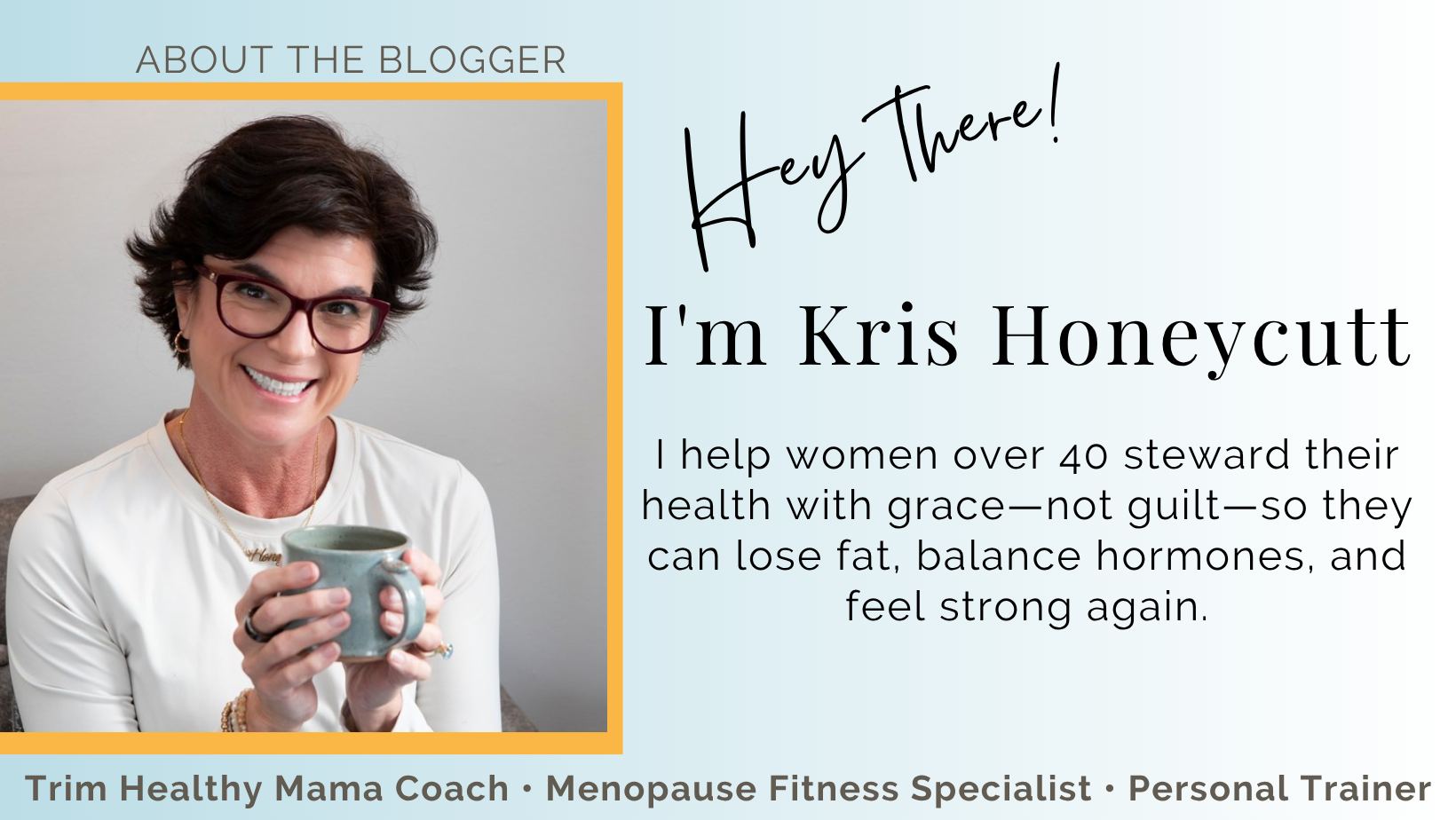
Kris Honeycutt
I’m a Trim Healthy executive coach, menopause fitness specialist, and personal trainer helping women over 40 lose stubborn weight, balance hormones, and feel confident in midlife bodies. Around here, we ditch diet drama and build real results—one wise, grace-filled step at a time.
Recent Posts

Join my Tribe today
How do you make Trim Healthy your lifestyle eating plan?
By getting community & coaching support.
Real change happens with accountability and habits. You get both inside Get Your Trim On Tribe Membership.
Get Your Trim On Store
Products that I have created to help you be successful in your Trim Healthy Mama journey.
What does Coach Kris buy from the THM store?
I am an official THM store affiliate and may earn a commission from purchases made through this link.
Baobab - Optimized Plant Protein - Optimized Whey Protein - Essential Amino Acids - No Carb Easy Bread
