Started HRT and Gained Weight? What You Need to Know
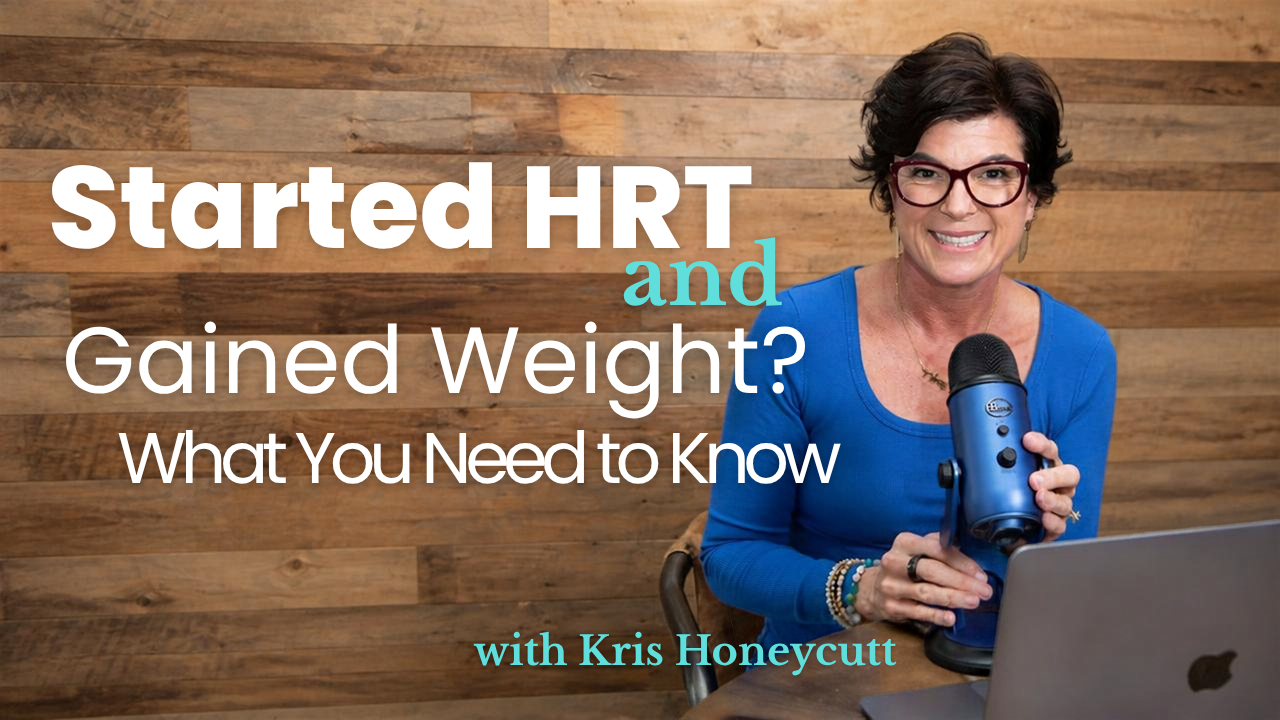
Apple Podcast - Spotify - YouTube
Have you ever looked down at your belly and thought, Where in the world did that come from?
Maybe you're eating pretty much the same way you've always eaten. You're trying to exercise, watching your portions, and doing your best to follow Trim Healthy Mama. But the scale keeps creeping up, your jeans feel tighter around the middle, and you're beginning to wonder if your hormones are working against you.
And then someone suggests hormone replacement therapy (HRT).
Wait a minute. If you're already dealing with perimenopause weight gain, hormonal imbalance, and stubborn belly fat, could adding hormones actually make things worse?
Ladies, this is a question I hear all the time, and it's one worth digging into.
Today, we're going to look at what the research says about HRT and weight gain, why your body may be storing more fat around your middle, and what you can do to support fat loss and build lasting muscle during menopause.
Because I want you making decisions about your body based on good information, not fear.
Does Hormone Replacement Therapy Cause Weight Gain?
Let's start with the big question.
Does HRT make women gain weight?
Based on the research we currently have, there isn't good evidence that menopausal hormone therapy itself causes weight gain.
Now, I want you to understand something important. That doesn't mean HRT makes you lose weight, either.
Those are two completely different claims, and unfortunately, social media likes to swing from one extreme to the other.
For years, women heard that taking estrogen would make them gain weight. Now we're hearing the opposite message: just balance your hormones and watch the weight fall off.
Ladies, neither message tells the whole story.
Research comparing women who received hormone therapy with women who received a placebo has not consistently found that hormone therapy causes greater weight gain.
In one randomized, placebo-controlled trial, researchers found no significant differences in body weight, total fat, abdominal fat, or fat-free mass between the groups.
That's important because there's a big difference between saying, "I gained weight while taking hormones" and "I gained weight because I was taking hormones."
And we need to understand that distinction before we start blaming every extra pound on our hormones.
Why Perimenopause Weight Gain Happens Even When Nothing Has Changed
Here's where things get interesting.
One reason hormone replacement therapy gets blamed for weight gain is simply because of when women typically begin taking it.
Think about what happens during perimenopause.
Your periods begin changing. Maybe you're experiencing hot flashes or waking up at 2 or 3 in the morning. You're tired, your workouts feel harder, and suddenly your body doesn't seem to respond the way it used to.
And then you put on your favorite jeans.
Oh, goodness. Where did this belly come from?
I've heard women say, "Kris, I've always carried my weight in my hips and thighs. Now everything is going straight to my middle!"
And yes, there is research supporting what you're noticing.
Menopause Changes Where Your Body Stores Fat
Visceral fat is the fat stored deeper inside your abdomen, surrounding your internal organs. Higher amounts are associated with increased metabolic and cardiovascular health risks.
And here's what makes this especially frustrating.
You can experience changes around your waist without seeing a dramatic change on the scale.
Your weight might only increase a few pounds, but your belly looks and feels different because your body is storing fat differently.
Some of these body composition changes appear to happen independently of chronological aging.
But that doesn't mean estrogen is responsible for everything happening to your body.
Aging, Muscle Loss, and Hormonal Changes Are Happening Together
Between our 40s and 60s, we have several things happening at the same time.
We may be losing muscle, sleeping poorly, experiencing more stress, or moving less throughout the day. Some of us have also gotten away from regular strength training.
And when we lose muscle, maintaining our weight and body composition can become more challenging.
This is one reason I talk so much about building muscle with my ladies.
As a personal trainer and menopause fitness specialist, I'm interested in more than the number on your scale.
I want to know what's happening to your muscle, your strength, your waist measurement, and your overall body composition.
Because losing weight while sacrificing valuable muscle isn't the outcome we're working toward.
I want you strong, capable, and healthy for the years ahead.
Can HRT Help Reduce Belly Fat During Menopause?
Now let's look at the other side of the research.
Some studies suggest menopausal hormone therapy may have modest beneficial effects on body composition.
In a Women's Health Initiative substudy involving more than 800 postmenopausal women, researchers found that women receiving estrogen plus a progestin lost less lean soft tissue over three years than women receiving a placebo.
They also had a lower ratio of trunk fat to leg fat.
Another randomized trial found that combined hormone therapy helped limit increases in abdominal fat, although it didn't significantly change total body fat or lean muscle mass.
That's interesting, isn't it?
But before you call your doctor asking for estrogen to lose 15 pounds, remember that these findings were modest and came from studies using particular hormone formulations.
HRT is not a weight-loss treatment.
It may influence certain aspects of body composition for some women, but it isn't a replacement for nutrition, strength training, walking, sleep, or stress management.
And those fundamentals matter whether you're taking hormones or not.
How Hormone Therapy Might Indirectly Support Weight Loss
There's another piece of this conversation that I don't want you to miss.
Sometimes improving menopause symptoms makes it easier to consistently take care of yourself.
Let me give you an example.
Imagine a woman who's waking up three or four times every night because of hot flashes and night sweats.
She's exhausted by morning. She doesn't have the energy to exercise, she's reaching for something sweet around 3:00 in the afternoon, and by dinnertime she's too tired to cook.
So she grabs whatever is easy.
And then somebody tells her she just needs more discipline.
Oh, ladies. We need to look at the whole woman.
Her hot flashes improve, she's sleeping better, and she's finally waking up feeling rested.
She has enough energy to take a walk, lift weights, and prepare some healthy meals.
Six months later, she's lost weight.
Did estrogen directly burn the fat off her belly? We can't make that assumption.
But did improving her menopause symptoms help remove some of the barriers that were keeping her from being consistent?
That is certainly possible.
And that's an important distinction.
What If You Start HRT and Suddenly Gain Three or Four Pounds?
Let's say you begin hormone replacement therapy, and within a few weeks the scale goes up.
Your first thought might be, Oh no. The hormones are making me fat!
Before jumping to that conclusion, look at the bigger picture.
Some women experience temporary bloating or fluid retention after starting or adjusting certain hormone therapies. That can affect the number on the scale without necessarily representing an increase in body fat.
I've personally spent years working with my practitioner to figure out what my body needs.
And I can tell you that adjusting hormone therapy isn't always a simple, one-appointment process.
There can be changes along the way, and that's why I encourage women to keep track of what's happening.
Pay attention to your sleep, energy, appetite, symptoms, activity, and weight trends.
Bring that information to your medical provider so you can evaluate what may be happening together.
Not All Hormone Replacement Therapy Is the Same
We also need to stop talking about hormone therapy as though it's one single medication.
There's estrogen, progesterone, progestins, and sometimes testosterone. There are different doses and methods of delivery, including oral medications, patches, gels, and creams.
And not every formulation has the same effects or risks.
So when someone online says, "Hormones made me gain 20 pounds," there are a lot of questions to ask.
Which hormones? What dose? How were they taking them? What other changes were happening in their body?
Were they perimenopausal or postmenopausal?
What was happening with their sleep, nutrition, exercise, and stress?
There are simply too many variables to assume every woman's experience will be the same.
That's why hormone therapy decisions need to be made with a qualified healthcare provider who understands your medical history, symptoms, and individual risk factors.
5 Things You Can Do About Menopause Belly Fat Right Now
This is the part I really want you to hear.
I don't want you sitting around waiting for your hormones to be perfectly balanced before you start taking care of yourself.
And I definitely don't want you assuming that if you aren't losing weight, your hormones must still be wrong.
Hormones matter. Absolutely.
But so do the everyday choices that support your metabolism, muscle, energy, and long-term health.
Here are five places I encourage my ladies to focus.
1. Prioritize Protein to Protect and Build Muscle
If you're following Trim Healthy Mama, you already have a wonderful foundation for building balanced meals.
But I want you looking closely at your protein.
Are you actually getting enough throughout the day to support your muscles?
For many of my ladies, we start by working toward approximately 25–30 grams of quality protein at each main meal, adjusting that amount to their individual needs.
Protein supports muscle maintenance and repair, helps with fullness, and becomes especially important as we age.
And remember, muscle is metabolically active tissue that plays an important role in maintaining strength and metabolic health.
2. Stop Relying on Cardio Alone
I love walking. I love pickleball. And I love seeing my ladies move their bodies.
But if your entire exercise routine consists of cardio, you're missing an important piece of midlife fitness.
Strength training needs to be part of your plan.
Start with two intentional full-body strength sessions each week if you're able.
You don't need to spend hours in the gym, but you do need to challenge your muscles appropriately and gradually increase that challenge as you get stronger.
Building muscle helps support your body composition, functional strength, and metabolic health as you age.
And that's a much better long-term investment than constantly trying to burn more calories.
3. Give Your Trim Healthy Meals Some Structure
This is one of the biggest areas I work on with women who've been following Trim Healthy Mama for years.
But their eating habits have gradually gotten a little scattered.
Maybe breakfast is mostly coffee, lunch is something small, and by late afternoon they're grabbing bites of whatever happens to be in the kitchen.
Then dinner rolls around and they're starving.
Sound familiar?
Let's bring some structure back to your meals.
Build balanced meals with quality protein, plants, and appropriate fuel. Consider whether you're consistently including energizing E meals, satisfying S meals, and appropriate snacks based on your needs.
We want a steady, sustainable rhythm that helps you feel nourished and satisfied.
4. Take Your Sleep Seriously
I know. You've heard me talk about sleep before.
But we can't ignore it when we're discussing hormonal changes and weight management.
Poor sleep can affect hunger, energy, recovery, and your ability to make intentional choices throughout the day.
And if menopause symptoms are waking you up night after night, that's worth addressing.
Start with what you can control.
Create a consistent bedtime, reduce evening distractions, and build a relaxing nighttime routine.
And if hot flashes or night sweats are disrupting your sleep, talk with your medical provider about treatment options.
5. Stop Letting the Scale Decide Whether You're Making Progress
This one is especially important.
Some of you are doing wonderful things for your health, but because the scale isn't moving as quickly as you'd like, you assume nothing is working.
Yet you're getting stronger.
Your energy is improving. You're eating more consistently, sleeping better, or noticing that your clothes fit differently.
Those things matter!
I want you paying attention to your waist measurements, strength, endurance, consistency, and how you feel.
We aren't ignoring your desire to lose weight. We're looking at your progress in a way that helps you protect the muscle and strength you're working so hard to build.
What Does God Say About Taking Care of Our Midlife Bodies?
Ladies, I also want to bring this back to something that's very important to me.
Our bodies are a gift from God, and we have an opportunity to steward them well through every season of life.
First Corinthians 6:19–20 reminds us that our bodies are temples of the Holy Spirit and that we are called to honor God with them.
For me, that means taking care of my health with wisdom, gratitude, and intentionality.
Sometimes that includes seeking medical care and asking good questions about hormone therapy.
Sometimes it means going to bed earlier, picking up my weights, eating a nourishing meal, or choosing to take a walk when I'd rather sit on the couch.
And sometimes it means changing the way I'm thinking about my body.
Because if every morning starts with frustration, discouragement, and the thought, Nothing I do ever works, that's going to influence how you approach your day.
I want to encourage you to replace that thought with something that helps you move forward.
I can make choices today that support the body God has given me.
You don't have to have everything figured out before you begin.
The Bottom Line: HRT, Weight Gain, and Belly Fat After 40
So, does hormone replacement therapy cause weight gain?
The current evidence doesn't support the blanket claim that menopausal hormone therapy causes women to gain weight.
Menopause itself can influence where your body stores fat, particularly around your abdomen. Aging, muscle loss, stress, sleep, and lifestyle changes are happening during that same season.
And while some research suggests hormone therapy may have modest benefits for body composition, it isn't a weight-loss medication.
If you're considering HRT, have an informed conversation with your medical provider.
If you're already taking hormones and struggling with weight gain, don't automatically assume the hormones are responsible.
Look at the whole picture.
And please don't neglect the things you can start doing today.
Eat enough quality protein. Build muscle. Walk regularly. Prioritize sleep. Nourish your body with balanced Trim Healthy meals, and give yourself room to be consistent without demanding perfection.
Ladies, my goal isn't simply for you to get smaller.
I want you strong. I want you energized. I want you confident in your body and in the choices you're making.
And I want you enjoying the life God has given you, with the strength to keep doing the things you love.
Ready to Finally Make Progress With Your Belly Fat?
If you've been following Trim Healthy Mama but feel like your midlife body isn't responding the way it used to, I'd love to help you put the pieces together.
Inside my Belly Fat Breakthrough Tribe, we focus on simple, intentional strategies that help you lose stubborn belly fat, build muscle, and stay consistent without feeling overwhelmed.
You'll get monthly guidance, strength-focused workouts, practical nutrition support, weekly coaching sessions, and a community of women who understand exactly what you're walking through.
You don't need another complicated plan. You need a clear path forward and the support to follow through.
Join the Belly Fat Breakthrough Tribe
Let's get you stronger, healthier, and making progress again!
Medical Disclaimer: This article is for educational purposes only and is not intended to diagnose, treat, or replace individualized medical advice. Hormone replacement therapy has potential benefits, risks, and contraindications that vary by individual. Always discuss hormone treatment, symptoms, and medication changes with a qualified healthcare provider. Kris Honeycutt is a Trim Healthy Mama Executive Coach, personal trainer, and Menopause Fitness Specialist, not a hormone-prescribing medical provider.
Ready for more real talk, fat loss tips, and hormone support made for midlife women?
Author
Kris Honeycutt
I’m a Trim Healthy executive coach, menopause fitness specialist, and personal trainer helping women over 40 lose stubborn weight, balance hormones, and feel confident in midlife bodies. Around here, we ditch diet drama and build real results—one wise, grace-filled step at a time.
Recent Posts

Join my Tribe today
How do you make Trim Healthy your lifestyle eating plan?
By getting community & coaching support.
Real change happens with accountability and habits. You get both inside Get Your Trim On Tribe Membership.
Get Your Trim On Store
Products that I have created to help you be successful in your Trim Healthy Mama journey.
What does Coach Kris buy from the THM store?
I am an official THM store affiliate and may earn a commission from purchases made through this link.
Baobab - Optimized Plant Protein - Optimized Whey Protein - Essential Amino Acids - No Carb Easy Bread
