The Smarter Way to Lose Belly Fat After Menopause
Apple Podcast - Spotify - YouTube
If you are trying to lose weight after menopause and feel like your belly fat is refusing to budge, you may assume the answer is to eat less and exercise harder. Maybe you have added more cardio, searched for new belly fat loss workouts, or tried to tighten up your Trim Healthy meals even more.
But what if your body does not need more punishment?
What if the smarter way to lose belly fat after menopause is to walk more, build muscle, fuel your body well, move consistently, and support your metabolism instead of constantly pushing it?
That may not sound flashy or extreme. It will not grab attention like a dramatic detox or a workout promising to melt belly fat in seven days. But sustainable strategies are the ones that help us create lasting results—and sustainable always wins.
Why Belly Fat Loss Feels Different After Menopause
Many women reach perimenopause or menopause and suddenly feel like they are living in a different body.
You may be eating the same foods and doing the same workouts you did in your 30s, but your waistline continues to change. You feel more tired, your recovery takes longer, and the belly fat that once responded to a few weeks of effort seems determined to stay.
You are not imagining it.
Hormonal changes during the menopause transition can affect where your body stores fat, how well you maintain muscle, how you respond to stress, and how efficiently your body handles carbohydrates. A strategy that worked beautifully in your younger years may no longer provide the same result.
That does not mean your body is broken.
It means your body has changed, and your strategy needs to change with it. As I often remind my clients, we cannot keep using yesterday’s strategy in today’s season.
Ecclesiastes tells us that there is a season for everything. Our bodies move through seasons too, and wisdom means learning how to care for the body we have today instead of fighting to get back to the body we had twenty years ago.
What a New Menopause Fat-Loss Study Can Teach Us
A recent study involving postmenopausal women has been getting quite a bit of attention in the menopause fitness world.
The study included seven resistance-trained women over the age of 55. For four days, the women followed an extremely low-calorie, high-protein plan and walked for approximately six hours each day.
Let me be very clear: I am not recommending that you eat extremely low calories or walk for six hours a day.
The study was small, highly controlled, and intentionally extreme. Researchers sometimes use extreme conditions to make certain responses easier to observe.
What made the results interesting was that the women lost fat while preserving—and possibly slightly increasing—lean mass. After the intense four-day phase, they spent several days eating at maintenance and then returned to more normal eating for the remainder of the month.
Some of the progress remained.
The takeaway is not that we should copy the protocol. The real value is in looking beneath the extreme approach and identifying the principles that may help us lose weight and support our metabolism in real life.
Walking Is One of the Smartest Belly Fat Loss Workouts
One of the biggest lessons from the study is the power of walking.
The women were not doing hours of boot camp, crushing HIIT workouts, or intense cardio classes. They were walking.
Walking can support blood sugar regulation, insulin sensitivity, stress reduction, circulation, and recovery. These things all matter when you are working toward belly fat loss after menopause.
Walking may not feel like a traditional workout, but that does not make it less valuable.
In fact, for many midlife women, walking is one of the best ways to increase calorie use and daily movement without placing more stress on an already stressed body. It can complement your strength training instead of competing with your recovery.
No, you do not need to walk for six hours.
A much more realistic goal is to gradually work toward approximately 7,000 to 10,000 steps a day based on your fitness level, lifestyle, and health. You can also break your movement into smaller pieces throughout the day.
A five- or ten-minute walk after a meal counts. Walking while you talk on the phone counts. Taking the stairs, parking farther away, and getting up from your desk every hour all count.
This is why I love exercise snacks.
Exercise snacks are short bursts of intentional movement that last anywhere from a couple of minutes to ten minutes. They can include walking, stairs, squats to a chair, wall push-ups, marching in place, or a few strength exercises.
You do not have to complete every belly fat loss workout in one long session. Movement adds up, and consistency is far more important than trying to be perfect.
Why Muscle Still Matters for Belly Fat Loss
Although the women in the study did not strength train during the four-day protocol, they were already resistance trained.
That matters.
They entered the study with muscle, and muscle is one of the greatest metabolic advantages we can build as we move through menopause.
Muscle helps your body use glucose more effectively. It supports strength, balance, mobility, bone health, and long-term independence.
It also gives your body a reason to preserve lean tissue when you are trying to lose weight.
This is why I encourage women over 40 to strength train two or three times each week. You do not need to spend hours in the gym or punish yourself with workouts that leave you sore for days.
A simple, progressive strength program can be incredibly effective.
Focus on movements such as squats or sit-to-stands, rows, presses, hinges, carries, and core work. Choose weights that challenge you while still allowing you to use good form.
The goal is not to burn as many calories as possible during the workout. The goal is to build and preserve the muscle that supports your metabolism for years to come.
Eating Less Is Not Always the Smarter Way to Lose Weight
Another important lesson from the study was what happened after the four days of restriction.
The researchers did not continue cutting the women’s food lower and lower. Their intake increased.
Many women believe that if eating less helps them lose weight, eating even less must work faster. Unfortunately, the metabolism does not operate like a simple calculator.
Your body adapts.
When you chronically underfuel, you may notice increased fatigue, poor recovery, disrupted sleep, stronger cravings, reduced movement, and difficulty maintaining muscle. You may be following the rules perfectly while your body quietly becomes more conservative with its energy.
Fueling your body is not the opposite of fat loss.
Fueling well is part of creating a body that feels safe enough to function properly, build muscle, move consistently, and release stored fat over time.
This is one of the things I appreciate about Trim Healthy. The plan teaches us how to separate our primary fuel sources while still giving the body nourishing protein, healthy carbohydrates, fats, and plenty of non-starchy vegetables.
We are not trying to starve the body into submission. We are learning how to fuel it wisely.
The Three-Day Trim Healthy Mini Fun Cycle
Sometimes the body and the brain benefit from a temporary change in routine.
Years ago, many women following Trim Healthy used longer fuel cycles. Those extended cycles can be too stressful for some women in menopause, especially if they are already dealing with fatigue, sleep disruption, or hormonal changes.
That is why I created a shortened version that I call the mini fun cycle.
This is not an official Trim Healthy protocol. It is simply a three-day strategy I have experimented with personally and used with some of my coaching clients.
Results can vary, and this is not something every woman needs to do.
The goal is not to severely restrict calories. The purpose is to create a temporary change in fuel type while continuing to eat enough protein and nourishing food.
Day One: A Light S Day
The first day is a Light S day.
Your meals will be centered around protein, non-starchy vegetables, and healthy fats. Instead of loading meals with a large amount of fat, aim to keep added fats moderate—often around one or two tablespoons per meal, depending on the food and recipe.
Choose lighter, nutrient-rich fat sources such as avocado, salmon, olive oil, nuts, seeds, coconut oil, feta, Parmesan, sheep’s cheese, or a small amount of blue cheese.
Your meal may look like grilled chicken over a large salad with olive oil dressing and avocado. Dinner might be salmon with roasted broccoli and a simple side salad.
This day temporarily lowers your carbohydrate intake.
However, your body should always have the final word.
If you feel exhausted, shaky, unusually hungry, or unwell, add an E meal. Midlife is not the season to ignore your body in the name of following a plan perfectly.
Day Two: An E Fuel Day
The second day is an E day.
You might have oatmeal with berries and lean protein for breakfast. Lunch could include chicken, brown rice, and vegetables, while dinner might be lean turkey with sweet potato and a large salad.
After lowering carbohydrates on the Light S day, the E day brings them back in.
Healthy carbohydrates can support energy, thyroid function, workouts, sleep, and recovery. They are not the enemy, especially for active women in menopause.
The key is learning how to use carbohydrates in a way that supports your goals.
Day Three: A Fuel Pull Day—or a Gentler Alternative
The third day is a Fuel Pull day, but this is where you need to be especially attentive to your body.
A Fuel Pull meal is low in both added fat and carbohydrates while remaining rich in lean protein and non-starchy vegetables. Berries may also fit into some meals.
Because Fuel Pull meals are lighter, I recommend eating more frequently on this day.
You may eat breakfast and then have another small fueling two or three hours later. Continue eating regularly throughout the day, aiming to meet your protein needs rather than seeing how little food you can consume.
For many women, approximately 100 grams of protein per day is a helpful target, though individual needs vary.
Some women will not feel well doing an entire Fuel Pull day. If that is you, do not force it.
A gentler alternative is to begin with an E breakfast, have a Fuel Pull lunch and snack, and then enjoy a regular Trim Healthy dinner. This still gives you a short Fuel Pull window without requiring you to stay there all day.
The mini fun cycle is meant to give your body and your meals a little variety. It should never leave you depleted, miserable, or afraid to eat.
How to Make the Mini Fun Cycle Easier
Planning is what makes this three-day cycle doable.
Choose days when you will mostly be at home and can control your meals. This is probably not the best strategy for a weekend filled with restaurant meals, travel, celebrations, or unpredictable schedules.
Write out your meals before you begin.
Keep them simple and repeat foods when that helps. You do not need three days of complicated recipes.
Prepare your protein, wash and chop vegetables, cook an E-friendly carbohydrate, and make sure you have quick Fuel Pull options ready. When you already know what you are eating, you are less likely to become overwhelmed and grab something that does not fit your plan.
Most importantly, pay attention to how you feel.
Your energy, hunger, sleep, mood, workouts, and cravings all give you valuable information. The goal is not to prove that you can complete the cycle.
The goal is to learn what supports your body.
The Smarter Way to Lose Belly Fat After Menopause
The biggest lesson from this study is not that you need an extreme protocol.
You do not need to eat 400 calories a day. You do not need to walk for six hours. You do not need punishing belly fat loss workouts that leave you exhausted and unable to recover.
The smarter strategy is much simpler.
Walk more. Build muscle. Eat enough protein. Fuel your body well. Move consistently. Take care of your sleep and stress. Give your body patience and time.
Romans 12:2 reminds us that transformation begins with the renewing of our minds.
That matters in our health journey too.
We can stop believing that change only counts when it is extreme. We can stop treating our bodies like problems to be punished and begin caring for them as gifts God has entrusted to us.
Your body may need a different approach than it did twenty years ago, but that does not mean progress is no longer possible.
Sustainable fat loss may not happen overnight, but every walk, every strength workout, every protein-rich meal, and every choice to begin again is moving you forward.
Sustainable is not boring.
Sustainable is what allows you to keep going long enough to see your body, strength, health, and confidence change.
Ready to Get Rid of Belly Fat?
You do not have to sort through all the conflicting menopause advice alone.
Inside the Belly Fat Breakthrough Tribe, I help women over 40 simplify their food, movement, hormones, and mindset using practical Trim Healthy strategies.
You will receive simple guidance, coaching, accountability, and realistic tools to help you lose belly fat, build muscle, and create a healthy lifestyle that lasts.
Ready to get rid of belly fat without constantly starting over?
Join us inside the Belly Fat Breakthrough Tribe and learn how to support your metabolism instead of punishing your body.
Ready for more real talk, fat loss tips, and hormone support made for midlife women?
Author
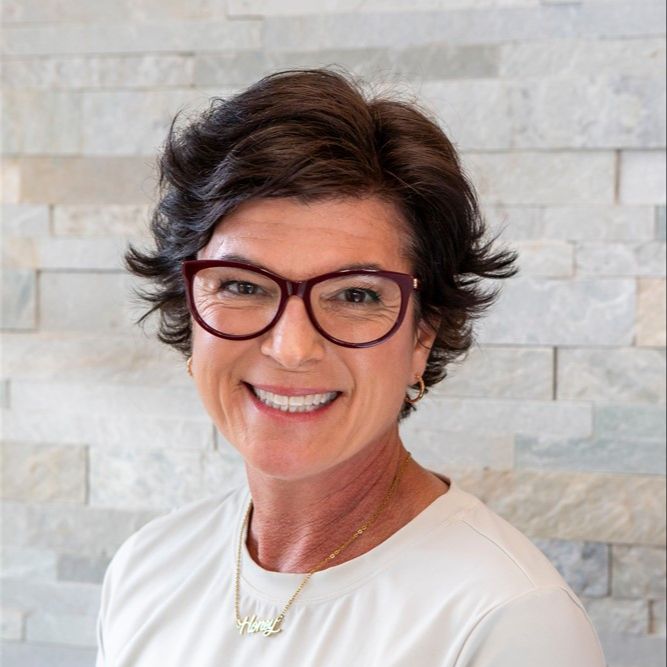
Kris Honeycutt
I’m a Trim Healthy executive coach, menopause fitness specialist, and personal trainer helping women over 40 lose stubborn weight, balance hormones, and feel confident in midlife bodies. Around here, we ditch diet drama and build real results—one wise, grace-filled step at a time.
Recent Posts

Join my Tribe today
How do you make Trim Healthy your lifestyle eating plan?
By getting community & coaching support.
Real change happens with accountability and habits. You get both inside Get Your Trim On Tribe Membership.
Get Your Trim On Store
Products that I have created to help you be successful in your Trim Healthy Mama journey.
What does Coach Kris buy from the THM store?
I am an official THM store affiliate and may earn a commission from purchases made through this link.
Baobab - Optimized Plant Protein - Optimized Whey Protein - Essential Amino Acids - No Carb Easy Bread
