5 Perimenopause Symptoms That Are Making Your Life Miserable

Apple Podcast - Spotify - YouTube
Have you ever wondered what in the world happened to your body? One minute, you're sleeping just fine, your periods are predictable, and you have enough energy to get through your day. Then suddenly, you're waking up at 3 a.m., dragging yourself out of bed, feeling irritated over the smallest things, and watching that stubborn belly fat creep up even though you're trying to eat healthy and exercise.
Maybe you're following Trim Healthy Mama, doing your best to stay on plan, and wondering why everything seems so much harder than it used to. You've probably started Googling low progesterone symptoms or hormone imbalance, trying to figure out why you're feeling so different.
Friend, I want you to understand what's happening because the hormonal changes of perimenopause can affect your sleep, mood, energy, and ability to stay consistent with the habits that help you lose weight and build muscle.
During perimenopause, your hormones estrogen and progesterone begin changing as ovulation becomes less predictable. Some months you ovulate, and some months you don't, which means your progesterone levels can fluctuate quite a bit.
Those changes don't affect every woman the same way, but they may help explain some of the frustrating symptoms you're experiencing. Let's talk about five common changes and what they might mean for you.
1. Your Period Has a Mind of Its Own
Remember when you could practically mark your calendar and know exactly when your period was coming? Now it might arrive early, show up two weeks late, get heavier than usual, or disappear for a month only to surprise you again.
One of the first noticeable signs of perimenopause can be changes in your menstrual cycle. You may experience:
-
Irregular periods that arrive earlier or later than expected.
-
Heavier or lighter bleeding than you're accustomed to.
-
Skipped periods followed by a cycle that suddenly returns.
One reason this happens is that ovulation becomes less consistent during perimenopause. Since your body produces most of its progesterone after ovulation, months without ovulation can mean less progesterone production.
This changes the normal relationship between estrogen and progesterone and can affect your menstrual cycle.
These changes are common during perimenopause, but unusually heavy or concerning bleeding should still be evaluated.
What can you do? Rather than trying to figure out every hormone fluctuation, start noticing your cycle patterns. Track when your period arrives, how long it lasts, and whether other symptoms seem to follow a pattern.
The goal is to better understand what your body is experiencing without making hormone tracking another overwhelming responsibility.
2. You're Exhausted but Can't Sleep
Oh, friend, this one can make you miserable! You're exhausted by the time your head hits the pillow, but then you're wide awake at 2 or 3 a.m., wondering whether you'll ever get back to sleep.
Sleep disturbances during perimenopause may include:
-
Waking up in the middle of the night and struggling to fall back asleep.
-
Difficulty falling asleep even though you're exhausted.
-
Night sweats or hot flashes that interrupt your rest.
-
Waking up tired despite spending enough hours in bed.
Progesterone is interesting because your body can convert it into compounds that interact with calming systems in your brain. That's one reason progesterone has been studied for its potential effects on sleep, although fluctuating progesterone isn't necessarily the reason you're waking up.
Changes in estrogen, night sweats, stress, and other sleep problems can also contribute.
And here's where poor sleep can interfere with your weight-loss goals.
And when this happens night after night, staying consistent with your Trim Healthy plan can become a real challenge.
What can you do? Start treating sleep as an important part of your fat-loss and muscle-building strategy. Establish a bedtime routine, keep your bedroom cool and comfortable, and give yourself some time to wind down before bed.
If night sweats or frequent awakenings are disrupting your sleep, don't assume you simply have to endure them. Persistent sleep problems deserve attention.
Your sleep matters just as much as the effort you're putting into your nutrition and workouts.
3. Your Mood Is All Over the Place
Have you noticed yourself getting frustrated over things that normally wouldn't bother you? Maybe you're more emotional, more impatient, or you just don't feel like yourself anymore.
One minute you're doing fine, and the next you're irritated because somebody asked you one more question!
Mood changes during perimenopause can show up as:
-
Increased irritability over little things.
-
Feeling more emotional or overwhelmed than usual.
-
Less patience with everyday situations.
-
Feeling anxious or unsettled without an obvious reason.
Hormonal fluctuations during perimenopause can contribute to mood changes, and when you add poor sleep and the responsibilities of everyday life, it's easy to feel overwhelmed.
I know many of you are caring for children, grandchildren, aging parents, husbands, and everybody else while trying to find a little time for yourself.
But here's something I want you to pay attention to. What are you telling yourself when you're struggling?
When you're already exhausted or frustrated, thoughts like "I'm failing," "I can't do this," or "I'll never get this weight off" can make everything feel even harder.
Romans 12:2 reminds us about renewing our minds, and sometimes that begins by recognizing a discouraging thought and choosing to respond differently.
What can you do? Instead of deciding you've ruined your whole week, ask yourself, "What one thing would help me move forward today?"
Maybe it's taking a short walk, preparing a nourishing meal, or simply giving yourself time to rest.
You may not be able to control every hormonal fluctuation, but you can begin changing how you respond when things get difficult.
4. You Have Absolutely No Energy
You wake up tired, push through the morning, and by afternoon you feel like your battery is down to 12%.
You still have dinner to make, laundry to finish, and a whole list of things that aren't going to do themselves. And somewhere on that list is the strength workout you promised yourself you would do.
Fatigue during perimenopause can affect everyday life in several ways:
-
Feeling exhausted even after a full night's sleep.
-
Afternoon energy crashes that make it difficult to finish your day.
-
Lack of motivation to exercise or prepare meals.
-
Difficulty keeping up with your normal responsibilities.
And here's something I really want you to hear.
Being exhausted doesn't mean you need to eat less or exercise harder to lose weight.
Your body needs adequate nourishment, movement, and recovery to function well.
As a personal trainer and menopause fitness specialist, I encourage women to build a strength-training routine they can sustain, even when their energy fluctuates.
What can you do? Learn to adjust your workouts to match your energy and recovery.
-
Feeling good? Complete your planned strength workout.
-
Low on energy? Consider a shorter strength session or a gentle walk.
-
Completely exhausted? Prioritize recovery and return to your routine when you're ready.
You can continue building healthy habits without pushing yourself to exhaustion.
Consistency doesn't mean doing the exact same thing every single day. It means having a plan you can adapt and return to.
5. Staying Consistent With Your Trim Healthy Plan Feels Impossible
This one may be the most frustrating because you already KNOW what to do!
You know how to put together an S or E meal, you understand the importance of protein, and you've heard me talk about strength training and building muscle.
But knowing what to do and having the energy to follow through are two very different things.
Maybe you're experiencing some of these struggles:
-
Meal planning feels exhausting, so you end up grabbing whatever is convenient.
-
You miss workouts because you're too tired or overwhelmed.
-
You find yourself snacking more often because you're hungry, tired, or unprepared.
-
You keep starting over on Monday because the previous week didn't go as planned.
-
Your belly fat isn't changing, and you're wondering what you're doing wrong.
This isn't a medical symptom of low progesterone, but it can be a very real consequence of the sleep and energy struggles that accompany perimenopause.
And it's exactly why I encourage my ladies to simplify their routines.
You don't need a more complicated Trim Healthy plan. You need one that's easier to follow when life gets busy.
Having a few easy protein-rich meals ready, keeping your workouts manageable, and knowing how to adjust when your schedule changes can make an enormous difference.
What can you do? Choose two or three simple meals you enjoy and keep the ingredients available. Have protein options ready to go, such as rotisserie chicken, Greek yogurt, eggs, or a protein smoothie.
Then schedule a realistic number of strength workouts that fit your current season of life.
You don't have to make every meal complicated or every workout exhausting to make progress.
What Do These Perimenopause Symptoms Mean for Belly Fat and Weight Loss?
Now, I know what you're probably wondering. Could these hormone changes be responsible for that stubborn belly fat that doesn't seem to budge?
Progesterone isn't a fat-burning hormone, and low progesterone doesn't automatically cause weight gain. However, the changes happening during perimenopause can make weight management more challenging.
Here's how these changes can affect your fat-loss efforts:
-
Poor sleep can affect appetite, energy, and food choices.
-
Ongoing fatigue can make it harder to stay physically active.
-
Mood changes and stress can make consistency more challenging.
-
Changes in estrogen and muscle mass can influence body composition and fat distribution.
That's why I want you looking beyond one hormone and paying attention to your overall approach to nutrition, movement, sleep, and recovery.
You don't need to respond to every frustrating symptom by cutting more calories, adding another workout, or purchasing another supplement.
Sometimes the most helpful next step is making your current routine easier to follow.
Maybe that means having two simple Trim Healthy meals you can repeat during a busy week, making sleep a priority, or committing to two strength workouts instead of planning five that you can't realistically complete.
Those small decisions can help you maintain momentum while your body is going through changes.
You Can Still Lose Belly Fat and Build Muscle During Perimenopause
Friend, I know how discouraging it can feel when your body seems to be changing faster than you can figure out what to do about it.
You want to feel good in your clothes again, have energy for your family, get stronger, and stop worrying that your belly is just going to keep getting bigger.
And when you've followed Trim Healthy Mama for years, it can be especially frustrating to wonder why the things that worked before don't seem to be producing the same results now.
You can learn how to nourish your body through perimenopause, protect and build muscle, and create routines that support your fat-loss goals.
You may need a different approach than you used in your 30s, and you may need to simplify some things rather than trying harder.
Remember, God's mercies are new every morning, and you have another opportunity to care for the body He's given you.
You don't need a perfect week to make progress. You need a plan you can return to, even when life gets messy.
Tired of Knowing What to Do but Struggling to Stay Consistent?
You know how to eat healthy and that you need to build muscle, but when you're exhausted, not sleeping, and your hormones are all over the place, even the simplest things feel overwhelming. And meanwhile, that stubborn belly fat isn't going anywhere!
That's why I created my Belly Fat Breakthrough Tribe.
Imagine knowing exactly what to eat, feeling confident about your workouts, and having the encouragement you need when life gets messy. No more second-guessing every decision or feeling like you have to start over every Monday.
Inside Tribe, you'll learn how to make Trim Healthy work for your midlife body so you can lose stubborn belly fat, build lasting muscle, and finally feel confident about the progress you're making.
Come join us inside Belly Fat Breakthrough Tribe and start feeling stronger, encouraged, and back in control of your health.
Ready for more real talk, fat loss tips, and hormone support made for midlife women?
Author

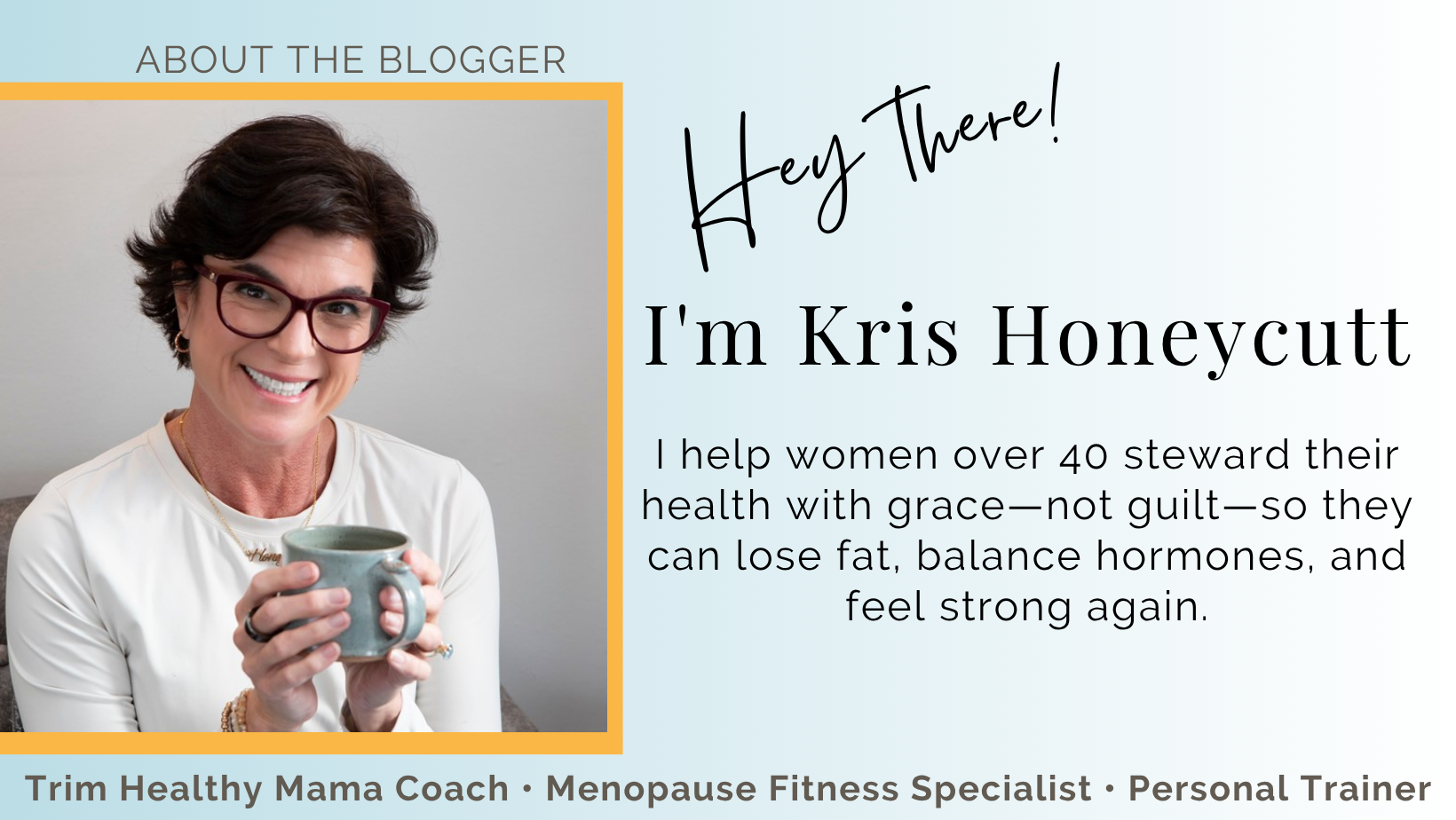
Kris Honeycutt
I’m a Trim Healthy executive coach, menopause fitness specialist, and personal trainer helping women over 40 lose stubborn weight, balance hormones, and feel confident in midlife bodies. Around here, we ditch diet drama and build real results—one wise, grace-filled step at a time.
Recent Posts

Join my Tribe today
How do you make Trim Healthy your lifestyle eating plan?
By getting community & coaching support.
Real change happens with accountability and habits. You get both inside Get Your Trim On Tribe Membership.
Get Your Trim On Store
Products that I have created to help you be successful in your Trim Healthy Mama journey.
What does Coach Kris buy from the THM store?
I am an official THM store affiliate and may earn a commission from purchases made through this link.
Baobab - Optimized Plant Protein - Optimized Whey Protein - Essential Amino Acids - No Carb Easy Bread
