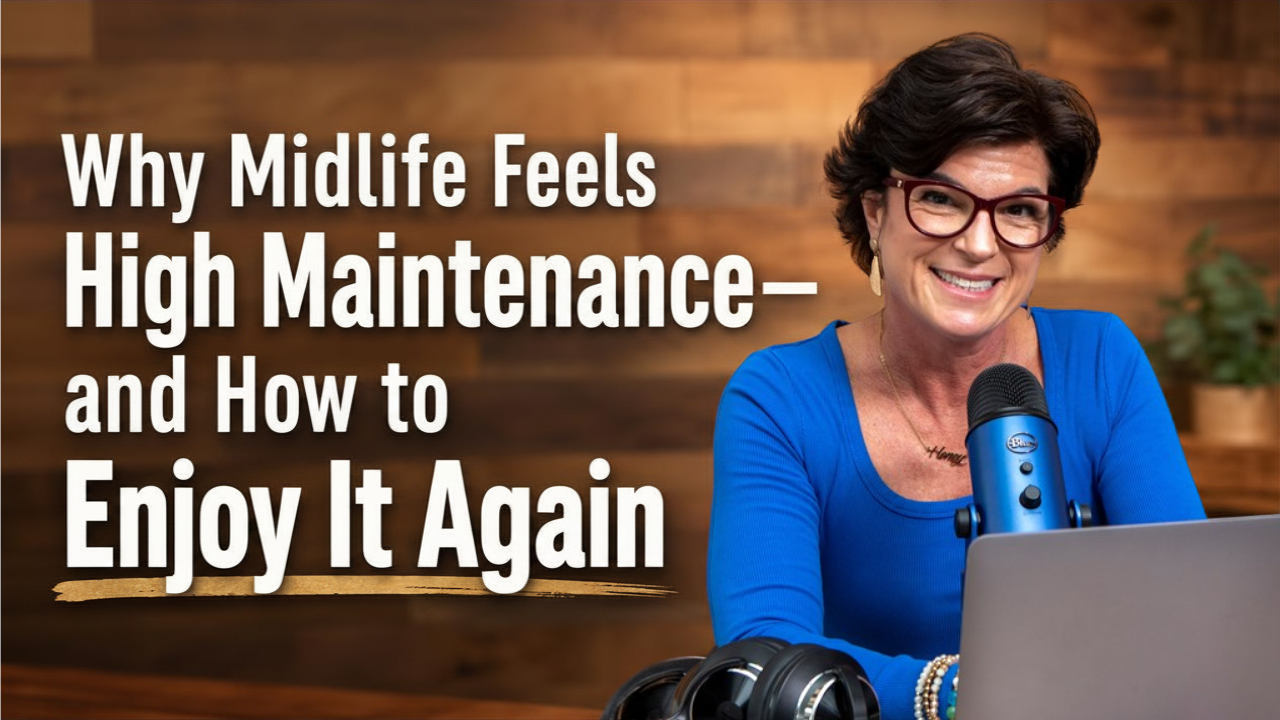
Why Midlife Feels High Maintenance—and How to Enjoy It Again
Apple Podcast - Spotify - YouTube
Midlife can feel like one long maintenance appointment.
Between hormone imbalance, changing skin, stubborn belly fat, gray hair, fatigue, sleep struggles, and trying to stay consistent with weight loss, it can start to feel like taking care of yourself has become a full-time job. You may walk into the bathroom to brush your teeth and suddenly notice five more things that apparently need your attention.
That happened to me recently.
I walked into my bathroom, looked in the mirror, and noticed my eyebrows. Then I noticed my hair. Then I started thinking about the lip wax I had been putting off, the gray roots, the peach fuzz, the skincare, and all the other things that seem to come with being a woman in midlife.
For a split second, I got mad.
I thought, “When did I become a full-time maintenance project?”
Maybe you have wondered the same thing.
Why Does Midlife Feel So High Maintenance?
When we were younger, getting ready could be pretty simple. Brush your teeth, pull your hair into a ponytail, put on a little mascara, and head out the door.
Now, the bathroom counter may look like you are running a small medical spa.
There may be hormone creams, progesterone, estrogen, testosterone, collagen products, skincare treatments, supplements, hair products, and creams for areas nobody warned you would eventually need their own creams.
Then there are the hairs that suddenly appear where we do not want them and disappear from the places where we do.
Your hair may become thinner, drier, grayer, or more wiry. Makeup that used to look smooth can settle into fine lines. Skin may become drier and more sensitive, and the sun damage from all those years of baby oil and tanning starts showing up.
And that is just what is happening on the outside.
Hormone imbalance can also affect your sleep, energy, body composition, appetite, mood, and ability to lose weight. The strategies that worked in your thirties may not produce the same results in perimenopause, menopause, or post-menopause.
This can feel frustrating because you are not only trying to look after your health. You may also feel like you are constantly adjusting to a body that keeps changing the rules.
Hormone Imbalance Can Affect More Than Your Weight
Hormone imbalance is often discussed in relation to hot flashes or irregular cycles, but its effects can reach much further.
Changes in estrogen, progesterone, testosterone, insulin, cortisol, and thyroid hormones may influence sleep, energy, muscle mass, mood, hunger, and where your body stores fat. Many women notice that belly fat becomes more stubborn, even when they are eating healthy foods and trying to stay active.
This does not mean every midlife symptom is caused by hormones. It does mean that your hormonal environment has changed and your approach may need to change with it.
For years, many women were taught to respond to weight gain by eating less and doing more cardio. But in midlife, that approach can sometimes leave you tired, hungry, stressed, and losing precious muscle.
Your body needs muscle for strength, stability, healthy aging, and metabolic support. That is why I encourage women to focus on adequate protein, nourishing plant foods, strength training, daily movement, recovery, and a healthy mindset.
The goal is not to punish your body until it becomes smaller.
The goal is to give your body the support it needs to become stronger, healthier, and more capable in this season.
When Sleep Becomes a Full Evening Production
Sleep deserves its own category in the midlife maintenance conversation.
At one time, you simply went to bed. Now, preparing for sleep can feel like preparing for a NASA launch.
You may have magnesium, progesterone, herbal tea, blue-light glasses, a cold bedroom, blackout curtains, a sound machine, a fan, and a carefully planned evening routine. You are told not to eat too close to bedtime, not to exercise too late, not to look at your phone, and perhaps even to tape your mouth shut.
That is a lot to manage when you are already tired.
Good sleep habits matter. Sleep supports your appetite signals, recovery, mood, energy, blood sugar, and ability to build muscle. But we can become so overwhelmed trying to create the perfect sleep routine that bedtime becomes another source of stress.
You do not have to do every recommendation you see online.
Choose the habits that make the biggest difference for you. That may be turning off your phone earlier, keeping your room cool, getting morning sunlight, eating balanced meals, lowering caffeine, praying before bed, or talking with your healthcare provider about persistent sleep problems.
A simple routine you can maintain is more helpful than an elaborate routine you dread.
The Midlife Mindset That Changes Everything
I am not against taking care of our appearance.
I believe it can be good to care for our skin, fix our hair, wear clothes we enjoy, and do things that help us feel put together. There is nothing wrong with coloring your hair, and there is nothing wrong with letting it go gray.
The problem begins when our self-care is driven by shame, fear, or the belief that growing older makes us less valuable.
That is where mindset matters.
I had to catch myself in that moment of frustration and decide that I could have a little rant, but I could not stay there. Staying in resentment would not improve my body, my health, or my day.
It would only steal my peace.
Philippians 4:8 reminds us to focus our minds on what is true, honorable, right, pure, lovely, and worthy of praise. That does not mean pretending every part of aging is easy. It means being careful about what we continually speak over ourselves.
You can acknowledge that something is hard without declaring war on your body.
You can say, “This is frustrating,” without saying, “I hate my body.”
You can seek solutions without making your body a problem that must constantly be fixed.
How to Stop Fighting Your Changing Body
There is a difference between caring for your body and chasing the body you had at 25.
At 58, I do not need to become 25 again. I want to honor the body I have now.
That means I may use hormone therapy because it has helped me feel better. I may color my hair because I enjoy it. I may use skincare because caring for my skin makes me feel good.
I also lift weights because I want to carry my grandchildren, protect my bones, preserve muscle, and remain independent as I age.
These choices are not about erasing every sign of growing older. They are about stewarding the body God has entrusted to me.
First Corinthians 6:19–20 reminds us that our bodies belong to God and should be treated with honor. That does not require perfection. It invites stewardship.
Stewardship asks a different question.
Instead of asking, “How do I get rid of every sign of aging?” we can ask, “How can I care for myself well in this season?”
That question creates room for wisdom, gratitude, and practical action.
Simple Ways to Enjoy Midlife Again
Enjoying midlife does not mean you enjoy every wrinkle, sleepless night, or unexpected chin hair.
It means those things do not get to define the whole season.
Start by simplifying your self-care. You do not need every supplement, cream, treatment, gadget, or routine someone recommends. Pay attention to what actually helps you and let go of what creates more clutter than benefit.
Next, focus on strength instead of chasing a smaller body at any cost. Strength training two or three times per week can help you preserve and build muscle. Pair that with adequate protein, balanced Trim Healthy meals, plants, walking, and recovery.
Give yourself permission to adjust.
The way you eat, move, sleep, and recover may need to look different than it did 20 years ago. That is not failure. It is wisdom.
Finally, practice gratitude without using gratitude to dismiss your struggles.
Every gray hair is evidence that you have lived. Every wrinkle may hold years of laughter, tears, prayers, and lessons. Every adjustment is a reminder that you are still here, still learning, and still able to grow stronger.
Your Body Is Not Just a Maintenance Project
Sometimes we spend so much energy feeling frustrated by the maintenance that we forget the privilege behind it.
Growing older is a gift not everyone receives.
That does not mean you have to love bladder leakage, fatigue, hormone imbalance, or stubborn belly fat. It means you can address those concerns without speaking against yourself or becoming consumed by everything that has changed.
You are allowed to seek support.
You are allowed to talk with your healthcare provider, explore appropriate treatment, improve your nutrition, build muscle, and make changes that help you feel better.
You are also allowed to laugh.
Midlife can be humbling. It can also be funny. Sometimes laughing at the readers, creams, supplements, blue-light glasses, and lengthy bedtime routine helps us hold it all a little more loosely.
We are not high maintenance.
We are simply high mileage.
Growing Older Strong, Healthy, and Grateful
My hope is not simply to look younger.
My hope is to grow older with grace, strength, wisdom, and gratitude.
I want to be strong enough to carry my grandchildren, capable enough to enjoy my life, and healthy enough to continue doing the work God has given me to do. I want to take care of my body without making my appearance the center of my life.
That is the invitation for all of us in midlife.
We can complain a little less, laugh a little more, and stop speaking against the bodies that have carried us through decades of life.
We can honor our changing hormones, nourish our bodies with healthy food, build lasting muscle, and develop the mindset needed to remain consistent.
Midlife may require more maintenance, but it can also hold more purpose, more confidence, and more freedom.
Ready to get rid of stubborn belly fat, build lasting muscle, and feel strong in your midlife body?
Join me inside the Belly Fat Breakthrough Tribe, where we bring together Trim Healthy principles, strength training, hormone support, mindset coaching, and simple strategies you can actually follow.
Ready for more real talk, fat loss tips, and hormone support made for midlife women?
Author
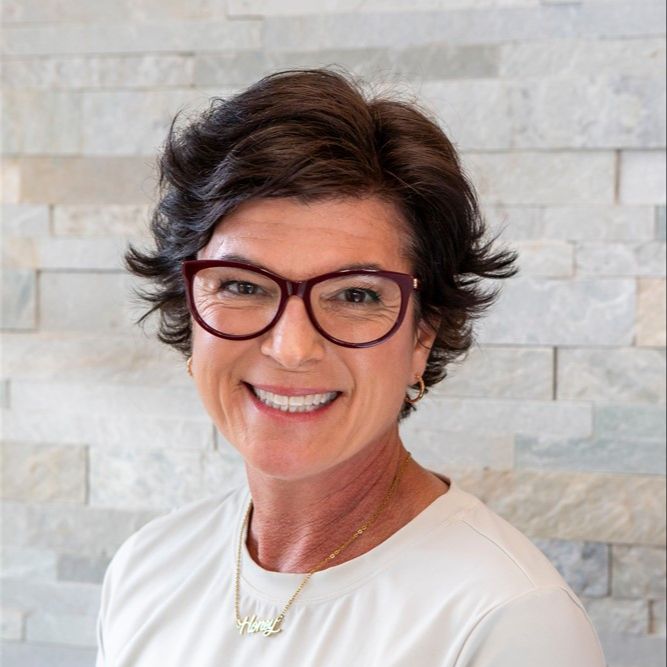
Kris Honeycutt
I’m a Trim Healthy executive coach, menopause fitness specialist, and personal trainer helping women over 40 lose stubborn weight, balance hormones, and feel confident in midlife bodies. Around here, we ditch diet drama and build real results—one wise, grace-filled step at a time.
Recent Posts

Join my Tribe today
How do you make Trim Healthy your lifestyle eating plan?
By getting community & coaching support.
Real change happens with accountability and habits. You get both inside Get Your Trim On Tribe Membership.
Get Your Trim On Store
Products that I have created to help you be successful in your Trim Healthy Mama journey.
What does Coach Kris buy from the THM store?
I am an official THM store affiliate and may earn a commission from purchases made through this link.
Baobab - Optimized Plant Protein - Optimized Whey Protein - Essential Amino Acids - No Carb Easy Bread
