The 3 Habits I’d Make Non-Negotiable for Back-to-School Moms
Apple Podcast - Spotify - YouTube
Back-to-school season has a funny way of exposing every weak spot in our routines, doesn’t it?
One week you feel like you have your meals planned, your workouts happening, and a few healthy habits finally clicking. Then school starts, homeschooling ramps back up, appointments hit the calendar, somebody needs poster board at 8:30 at night, and suddenly you’re wondering when you’re supposed to take care of yourself.
If that sounds familiar, I want you to hear this: this is not the season to create a more complicated plan. It’s the season to simplify.
If you want to lose weight, high-protein meals, consistent movement, and strength training still matter. But you don’t have to execute all of them perfectly to make progress.
The goal during a busy season is to identify the few things that keep you connected to the woman you are becoming—and keep doing those things.
Back-to-School Weight Loss Doesn’t Require Doing Everything
One of the biggest mistakes I see women make when life gets busy is trying to hold themselves to the same routine they had during a completely different season.
Maybe summer gave you more time in the morning. Maybe your grandchildren weren’t in activities. Maybe your homeschooling schedule was lighter. Maybe you had fewer appointments and commitments.
Now everything has shifted, and the pressure to “keep up” with your old routine can feel overwhelming. You may even find yourself thinking, “I just can’t focus on myself when school starts.”
But when that thought becomes your default, it subtly shapes your entire day. You wake up already feeling behind. You skip planning because it feels pointless. You grab whatever food is easiest, skip the workout, and tell yourself you’ll reset when life calms down.
The problem is, life rarely “calms down” in the way we imagine. There is always another busy season waiting—holidays, travel, sports schedules, or unexpected responsibilities.
Instead of waiting for a perfect window of time, the invitation is to learn how to support your body inside the life you actually have right now. That shift alone changes everything.
The Healthy Habit That Works Is the One You Can Repeat
This is where I want you to think about your non-negotiables in a very different way.
Not as a long list of expectations. Not as a brand-new morning routine that requires waking up at 5 a.m. to drink lemon water, journal, meal prep, do an hour-long workout, read your Bible, meditate, and watch the sunrise before anyone else is awake.
Instead, think smaller. Think repeatable.
A healthy habit becomes powerful when it fits your real life often enough that it stops feeling like a struggle and starts feeling like part of who you are.
For some women, that might look like committing to two strength workouts per week instead of five. It may not feel like “enough” at first, but consistency matters far more than intensity you can’t maintain.
For others, it might be anchoring the day with a protein-centered breakfast so you’re not starting on empty. Or it might be making a simple decision about dinner earlier in the day so you’re not scrambling at 5:30 p.m.
None of these habits are flashy. They don’t look impressive on social media. But they are the kinds of steady, repeatable choices that actually create change over time.
Too Busy to Work Out? Make Strength Training Smaller
Exercise is one of the first things to disappear when life gets busy, especially for women who tend to think in all-or-nothing terms.
If you can’t do a full 45-minute workout, it’s easy to assume it doesn’t “count” or that it’s not worth doing at all. So instead of adjusting, you skip it entirely.
But what if you zoomed in instead of out?
What if 45 minutes became 30? Or 20? Or even 15?
Current physical activity guidelines recommend muscle-strengthening activities at least two days per week for adults, and they also emphasize that movement can be broken into smaller segments rather than done all at once.
That matters even more in midlife, when maintaining muscle becomes increasingly important. Research shows that lean mass can naturally decline during the menopausal transition, which is why resistance training is such a valuable tool in this season of life.
So when we talk about strength training for weight loss, we’re not just talking about calories burned in a single workout. We’re talking about building and preserving muscle that supports your metabolism, your strength, and your long-term health.
Use Habit Stacking to Make Workouts Easier
One of the simplest ways to make exercise more consistent is to stop treating it as a separate decision you have to make every day.
Instead, attach it to something you already do. This is called habit stacking, and it removes a lot of the mental friction that leads to procrastination.
For example, instead of saying, “I’ll work out sometime Tuesday,” you connect it to a specific moment in your day. After you drop the kids off, you go straight to the gym. After morning quiet time, you start your workout. When the kids begin independent schoolwork, you lift for 20 minutes. Or after lunch on certain days, you take a short strength session or walk.
When the decision is already made, you don’t waste energy debating it later.
Because often, the hardest part of working out isn’t the workout itself—it’s the time you lose scrolling, deciding, and negotiating with yourself about whether or not you feel like it.
Reduce the Friction Before the Busy Day Begins
Another powerful strategy is simply making tomorrow easier before it starts.
At night, take a moment to ask yourself: What could make tomorrow unnecessarily difficult?
Sometimes the answer is surprisingly simple. Your weights might be tucked away where you’ll forget about them, so you bring them into view. Your workout clothes might still be buried in laundry, so you lay them out ahead of time. Your breakfast plan might fall apart because ingredients are frozen or missing, so you prep what you can in advance.
None of these are discipline issues. They are friction issues.
And when you reduce friction, you make the healthy choice the easy choice.
Want to Lose Weight? High-Protein Meals Make Busy Days Simpler
Protein is one of the most stabilizing tools you can use in a busy season, especially for women in midlife.
When your schedule is unpredictable, you don’t necessarily need a complicated meal plan. You need a simple anchor. A helpful question to start with is: Where is my protein?
For many women, aiming for roughly 25–30 grams of protein per meal can be a helpful guideline, depending on individual needs. Research in middle-aged and older adults suggests that distributing protein across meals may support muscle health, especially when combined with resistance training.
From there, you can build your meal using simple structure: protein first, then plants, then your intentional fuel source.
That might look like chicken over a large salad with healthy fats for an S meal. It could be lean protein with vegetables and an appropriate E fuel. Or it might be a simple Fuel Pull that still leaves you satisfied.
The goal is not complexity. The goal is consistency.
One Off-Plan Meal Does Not Require a Punishment Plan
Let’s be honest—life will not always go according to plan.
There will be pizza nights. There will be school events with hot dogs, chips, and cookies. There will be days when you end up eating your child’s leftovers standing at the counter because you didn’t get a chance to eat earlier.
And in those moments, what matters most is what happens next.
What I don’t want you doing is trying to “fix” it with restriction or punishment. Skipping meals the next day, eating overly restrictive foods, or trying to over-exercise to compensate only creates a cycle that keeps you stuck.
Instead, use what I call the next-meal rescue.
Your next meal simply goes back on plan: protein, plants, and intentional fuel.
That’s it.
One off-plan meal is not the problem. The problem is when one meal turns into several days of “I already messed up, so it doesn’t matter.”
Your Thoughts Are Part of Your Healthy Habits Too
Your habits are not just what you eat or how you move. They also include the thoughts you repeat to yourself during busy seasons.
It’s easy to fall into patterns like: “Homeschooling takes all my time,” or “I can’t focus on myself once school starts,” or “This time of year is always chaotic.”
Those thoughts feel true because they are familiar, but they also shape your behavior in ways you may not realize.
Instead, try thoughts that are both honest and helpful. Something like: “My schedule is different, and I can adjust to it.” Or, “I don’t have to do everything to take care of myself.” Or, “I can keep a few simple anchors even in a busy week.”
There is a big difference between believing a season is demanding and believing it is impossible. One keeps you stuck. The other keeps you moving.
Give Your New Routine Time to Work
It’s important not to judge your entire school year based on the first few chaotic days.
The beginning of a new schedule always comes with adjustment—forgotten items, shifting routines, emotional transitions, and a learning curve for everyone involved.
Instead of reacting emotionally to every hard day, give yourself time to observe.
Ask simple questions: What worked today? What didn’t? When did I feel rushed? When did I get overly hungry? What could I adjust tomorrow?
This is not about perfection. It’s about awareness and small adjustments over time.
That is what real coaching looks like.
Choose Your 3 Back-to-School Healthy Habits
This week, choose just three anchors to focus on.
They might look like:
-
Eating a protein-centered breakfast
-
Deciding on dinner earlier in the day
-
Completing two strength workouts per week
Or:
-
Sitting down for lunch instead of eating on the go
-
Preparing an afternoon snack before you’re overly hungry
-
Doing a simple weekly food reset and restock
Or:
-
Not finishing the kids’ leftovers
-
Keeping a protein snack in the car
-
Taking a short walk after meals
These are not rules to follow perfectly. They are anchors to return to when life gets messy.
They are your floor, not your ceiling.
Back-to-School Season Doesn’t Mean You Disappear
You do not have to disappear from your own priorities just because someone else’s schedule becomes more demanding.
You can care for your family and care for your body. You can homeschool your children and still lift weights twice a week. You can have a draining day and still choose your next meal with intention.
That small word—and—matters more than we realize.
Galatians 6:9 reminds us not to grow weary in doing good, because in due season there is a harvest if we don’t give up. And often, that faithfulness doesn’t look dramatic. It looks ordinary.
It looks like making the protein breakfast. Picking up the weights for 15 minutes. Walking for ten. Planning dinner ahead of time. And then doing it again tomorrow.
So instead of asking, “How am I going to fit everything in this school year?” try asking a better question:
“What are the three things I want to keep doing, even when life gets busy?”
Start there. And let those simple, repeatable choices carry you forward into strength, consistency, and a healthier midlife season.
Ready for more real talk, fat loss tips, and hormone support made for midlife women?
Author

Kris Honeycutt
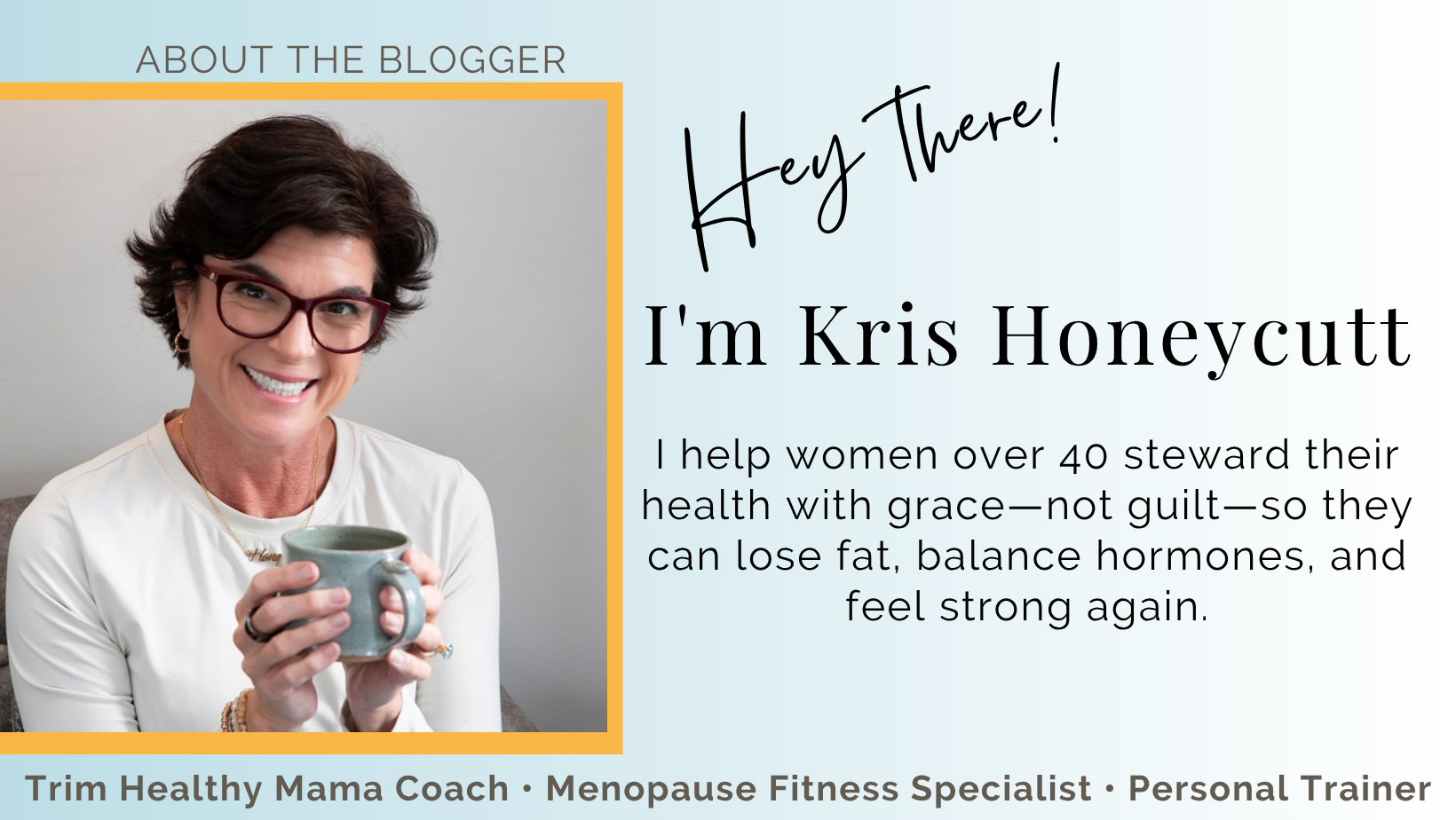
I’m a Trim Healthy executive coach, menopause fitness specialist, and personal trainer helping women over 40 lose stubborn weight, balance hormones, and feel confident in midlife bodies. Around here, we ditch diet drama and build real results—one wise, grace-filled step at a time.
Recent Posts

Join my Tribe today
How do you make Trim Healthy your lifestyle eating plan?
By getting community & coaching support.
Real change happens with accountability and habits. You get both inside Get Your Trim On Tribe Membership.
Get Your Trim On Store
Products that I have created to help you be successful in your Trim Healthy Mama journey.
What does Coach Kris buy from the THM store?
I am an official THM store affiliate and may earn a commission from purchases made through this link.
Baobab - Optimized Plant Protein - Optimized Whey Protein - Essential Amino Acids - No Carb Easy Bread
