The Truth About High Cortisol, Recovery, and Weight Loss After 40
Apple Podcast - Spotify - YouTube
If you're doing all the things—walking more, lifting weights, staying on plan, trying to lose weight—and yet you still feel exhausted, inflamed, sore, and stuck, I want to offer a different perspective.
What if your body doesn't need more effort?
What if it needs more recovery?
This is one of the biggest lessons I've learned both personally and as a menopause fitness specialist working with women in perimenopause and menopause. So many midlife women have spent decades believing that more is better. More exercise. More discipline. More restriction. More pushing through.
But after 40, our bodies often respond better to wisdom than willpower.
Today I want to talk about something that most women completely overlook: the deload week.
And honestly, it may be one of the missing pieces behind your fatigue, stalled fat loss, inflammation, soreness, and even symptoms of high cortisol.
What Is a Deload Week?
Let's keep this simple.
A deload week is a planned week where you intentionally reduce exercise intensity and overall stress on the body so you can recover.
That's it.
You aren't quitting.
You aren't falling off track.
You aren't becoming lazy.
You're giving your body an opportunity to repair, rebuild, and recover.
Think of it like taking your foot off the gas pedal long enough for the engine to cool down.
Most women understand the importance of charging their phone. They understand the importance of putting gas in their car.
But when it comes to their own bodies, they often expect themselves to run on empty indefinitely.
Eventually, the body pushes back.
Why Recovery Matters More After 40
One of the realities of perimenopause and menopause is that recovery changes.
Hormones shift.
Sleep changes.
Inflammation becomes more noticeable.
Muscle recovery takes longer.
Stress affects us differently.
Many women are still trying to exercise like they did in their twenties while their nervous system is waving a white flag.
Friend, your body isn't twenty-five anymore.
And that's not bad news.
It simply means your body requires a different strategy.
As estrogen declines and hormonal changes occur, high cortisol can have a greater impact on how you feel. Many women notice more belly fat, increased inflammation, poor sleep, cravings, irritability, and slower recovery.
When we continue pushing through those signals, we often create even more stress.
Sometimes the answer isn't another workout.
Sometimes the answer is recovery.
Muscle Is Built During Recovery, Not During Workouts
This is one of the most important concepts women need to understand.
Strength training creates the stimulus.
Recovery creates the results.
When you lift weights, you're creating small amounts of stress that challenge the muscles.
Your body then uses recovery time to rebuild those muscles stronger than before.
The same principle applies to many areas of health.
Hormone balance improves during recovery.
The nervous system repairs during recovery.
Inflammation decreases during recovery.
Energy is restored during recovery.
This is why some women are shocked to see the scale move after a deload week.
Their bodies finally get a chance to exhale.
When high cortisol remains elevated for long periods, the body often feels like it's stuck in survival mode. Recovery can help create the environment where healing and fat loss become easier.
Signs Your Body May Need a Deload Week
One thing I've noticed over the years is that women are incredibly good at ignoring their own signals.
We've been taught to push through.
Push through fatigue.
Push through soreness.
Push through stress.
Push through exhaustion.
But wisdom often sounds different.
Wisdom says, "Pay attention."
Your body may be asking for a deload week if:
- You're exhausted even after sleeping
- Your workouts feel harder than usual
- You're sore all the time
- Your motivation has disappeared
- Your sleep quality has worsened
- You're feeling more emotional or irritable
- Cravings have increased
- You feel puffy or inflamed
- Your body feels wired but tired
- You dread workouts you normally enjoy
These signs don't necessarily mean something is wrong.
They may simply mean your body needs support.
High Cortisol and the Midlife Woman
Many women hear the term high cortisol and immediately think something is medically wrong.
While there can certainly be health conditions involved, often what I see is chronic stress stacking on top of chronic stress.
Busy schedules.
Poor sleep.
Family responsibilities.
Work demands.
Hormonal shifts.
Overtraining.
Undereating.
It's a lot.
Then we add more intense exercise because we're trying to lose weight faster.
The result can be a body that feels overwhelmed instead of supported.
Your body was never designed to stay in "go mode" all the time.
God created rhythms.
Day and night.
Work and rest.
Activity and recovery.
Ignoring those rhythms eventually catches up with us.
What Does a Deload Week Actually Look Like?
A lot of women hear "take a week off" and immediately picture sitting on the couch for seven days.
That isn't what I'm talking about.
Movement is still valuable.
We're simply lowering the stress load.
A deload week might include:
- Walking instead of HIIT workouts
- Lighter weights
- Fewer sets
- Stretching and mobility work
- Yoga or Pilates
- Swimming
- Rebounding
- Whole-body vibration training
- More time outdoors
- Extra sleep
The goal is to feel refreshed when the week ends.
Not depleted.
Not exhausted.
Not dreading another workout.
Movement should support your life.
It shouldn't drain the life out of you.
How Often Should Women Over 40 Take a Deload Week?
This is one of the most common questions I receive.
In general, many women over 40 benefit from scheduling a deload week every 6 to 12 weeks.
Personally, I often take a full week away from heavy strength training and HIIT.
I'll still walk.
I'll still move.
I'll enjoy activities that feel restorative.
But I intentionally lower the intensity.
The beautiful thing is that I usually come back feeling stronger, more motivated, and ready to train again.
That's the purpose.
Recovery isn't about stopping.
It's about preparing for what's next.
The Mindset Shift Many Women Need
One of the biggest fears women have is this:
"What if I don't get started again?"
I understand that fear.
But that's really a mindset issue, not a recovery issue.
A deload week is intentional.
You decide when it starts.
You decide when it ends.
You commit to yourself.
Just like any healthy habit, consistency comes from honoring your commitments.
Sometimes life naturally creates a deload week for us.
A vacation.
A family emergency.
A busy season.
A wedding.
A funeral.
A week where life simply happens.
Instead of panicking, we can remind ourselves:
"Okay. Let's reset and get back on track."
That's what sustainable health looks like.
What the Bible Teaches About Rest
I also think this conversation matters spiritually.
Many women carry themselves like machines instead of human beings.
We feel guilty slowing down.
We feel guilty resting.
We feel guilty saying no.
But when I read Scripture, I see something very different.
I see rhythms of Sabbath.
I see pauses.
I see restoration.
I see Jesus stepping away to pray and rest.
Biblical rest was never laziness.
It was trust.
Trust that God is holding everything together even when we aren't striving.
Trust that our value isn't determined by our productivity.
Trust that we don't have to earn our worth through exhaustion.
That perspective changes everything.
Sometimes the Next Breakthrough Comes Through Recovery
Friend, if you've been feeling exhausted, inflamed, emotional, sore, or depleted lately, I want you to consider something.
Your body may not need more pressure.
It may need more support.
If your strength training feels harder than normal, if your motivation has disappeared, or if your symptoms of high cortisol seem to be increasing, a deload week may be exactly what your body is asking for.
Sometimes the next breakthrough doesn't come from pushing harder.
Sometimes it comes from finally listening.
Recovery is not falling behind.
Recovery is part of moving forward.
And for many women in midlife, it may be the very thing that helps them lose weight, feel stronger, and regain the energy they've been missing.
Give yourself permission to rest.
Your body just might thank you for it.
Ready for more real talk, fat loss tips, and hormone support made for midlife women?
Author

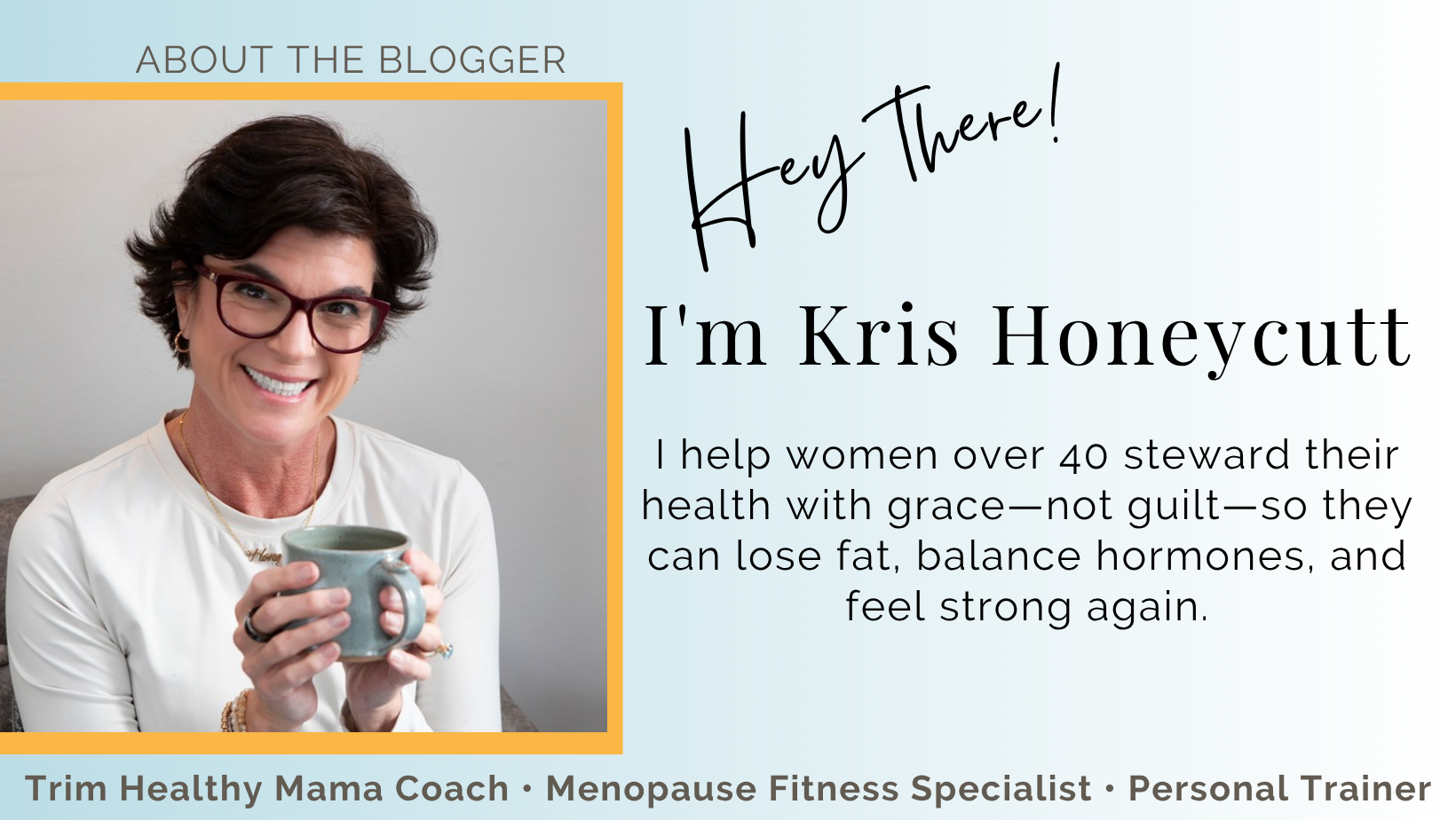
Kris Honeycutt
I’m a Trim Healthy executive coach, menopause fitness specialist, and personal trainer helping women over 40 lose stubborn weight, balance hormones, and feel confident in midlife bodies. Around here, we ditch diet drama and build real results—one wise, grace-filled step at a time.
Recent Posts

Join my Tribe today
How do you make Trim Healthy your lifestyle eating plan?
By getting community & coaching support.
Real change happens with accountability and habits. You get both inside Get Your Trim On Tribe Membership.
Get Your Trim On Store
Products that I have created to help you be successful in your Trim Healthy Mama journey.
What does Coach Kris buy from the THM store?
I am an official THM store affiliate and may earn a commission from purchases made through this link.
Baobab - Optimized Plant Protein - Optimized Whey Protein - Essential Amino Acids - No Carb Easy Bread
